
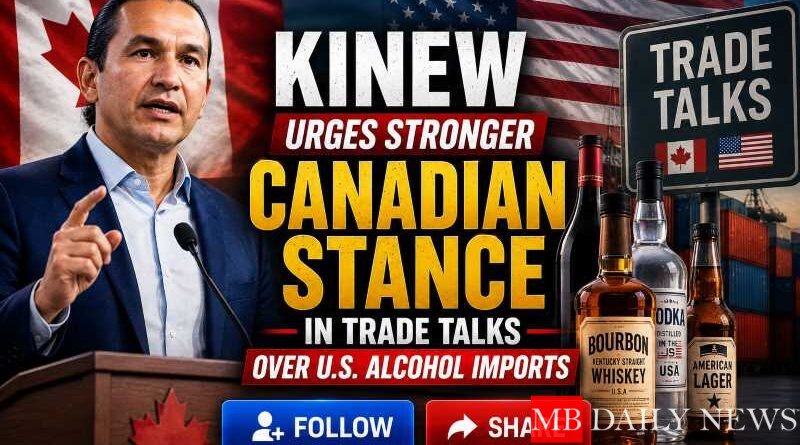
Kinew Urges Stronger Canadian Stance in Trade Talks Over U.S. Alcohol Imports
MB DAILY NEWS | Raleigh, NC.
Manitoba Premier Wab Kinew expressed concerns about Canada’s approach to trade negotiations with the United States. He believes Canada should adopt a firmer stance, particularly regarding U.S. alcohol imports. Kinew’s remarks highlight the ongoing challenges in securing favorable trade terms. He understands the complexities involved in negotiations led by Prime Minister Mark Carney. Kinew’s perspective reflects a broader sentiment among provincial leaders. The implications of these negotiations could significantly impact local economies.
Trade Negotiation Dynamics
Negotiations with the U.S. often involve balancing national interests with provincial concerns. Kinew’s comments suggest a need for greater alignment between federal and provincial priorities. The stakes are high, especially for industries reliant on cross-border trade. A successful deal could enhance market access for Canadian products. Conversely, a weak agreement may hinder growth opportunities. Stakeholders are closely monitoring the outcomes of these discussions.
Provincial Perspectives
Provincial leaders like Kinew play a crucial role in shaping trade policy. Their insights reflect the diverse economic landscapes across Canada. Kinew’s advocacy for a stronger position resonates with other provinces facing similar challenges. Each region has unique interests that must be addressed in negotiations. The collaboration between federal and provincial governments is essential for a cohesive strategy. Observers will watch how these dynamics unfold in upcoming talks.
Impact on Local Economies
The potential reinstatement of U.S. alcohol imports could have significant economic implications. Local businesses depend on favorable trade conditions to thrive. Kinew’s push for a stronger stance aims to protect these interests. A successful negotiation could lead to increased competition and lower prices for consumers. Conversely, failure to secure a deal may result in economic setbacks for certain sectors. The outcome will likely influence public sentiment toward trade policies.
Future Trade Relations
Canada’s trade relationship with the U.S. remains a critical issue for policymakers. Kinew’s comments underscore the importance of addressing trade barriers effectively. Future negotiations will likely focus on various sectors, including agriculture and manufacturing. The approach taken by Canadian leaders will shape the trajectory of these relations. Stakeholders are eager to see how the government balances domestic needs with international obligations. The evolving landscape will require careful navigation.
Public Sentiment and Political Pressure
Public opinion plays a significant role in shaping trade policy decisions. Kinew’s remarks may reflect growing frustration among Canadians regarding trade negotiations. As discussions progress, political pressure may mount for a more assertive approach. Leaders must consider the voices of constituents who feel the impact of trade policies. The balance between negotiation tactics and public expectations will be crucial. Future polls may reveal shifts in sentiment as negotiations unfold.
What Lies Ahead
As trade talks continue, the focus will remain on key issues like U.S. alcohol imports. Kinew’s call for a stronger Canadian position may resonate with other provincial leaders. The outcome of these negotiations could set a precedent for future trade agreements. Stakeholders will be vigilant in assessing the government’s strategies. The implications for local economies and industries are significant. Observers will closely monitor developments in the coming weeks.