
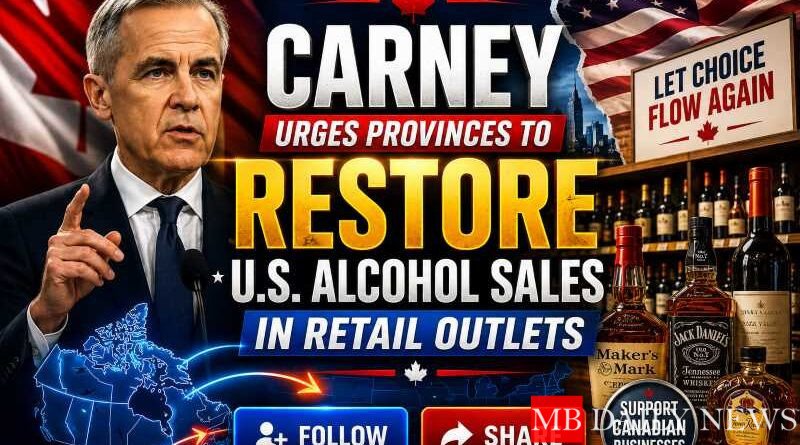
Carney Urges Provinces to Restore U.S. Alcohol Sales in Retail Outlets
MB DAILY NEWS | Raleigh, NC.
Carney recently called on provincial leaders to reinstate U.S. alcohol sales in retail stores. This initiative aims to leverage existing trade advantages between Canada and the United States. By restoring these sales, provinces could enhance consumer choice and stimulate local economies. The proposal aligns with broader efforts to strengthen cross-border trade relationships. Stakeholders are keen to see how this plan unfolds in the coming weeks. The impact on local businesses and consumers remains a focal point of discussion.
Trade Benefits at Stake
Carney emphasized the importance of capitalizing on trade benefits that already exist between Canada and the U.S. The proposed plan seeks to build on these advantages to create a more favorable market environment. Increased access to U.S. alcohol could attract more consumers to local stores. This move may also encourage competition among retailers, potentially lowering prices. Observers are watching closely to see how provinces respond to this call. The implications for both trade and consumer behavior could be significant.
Provincial Responses Expected
Provincial governments will likely weigh the potential economic benefits against local regulations. Each province has unique considerations regarding alcohol sales and distribution. Leaders may debate the merits of increased access to U.S. products. Some may express concerns about the impact on local producers. The dialogue around this issue could shape future trade policies. Stakeholders are eager to see how these discussions evolve.
Consumer Impact
Restoring U.S. alcohol sales could significantly affect consumer choices across Canada. Increased availability may lead to a wider variety of products for consumers. This change could also enhance the shopping experience in retail outlets. Consumers often seek diverse options, and this initiative could meet that demand. The potential for lower prices may also attract more shoppers. Observers anticipate a shift in purchasing patterns if the proposal moves forward.
Local Business Considerations
Local businesses will need to adapt to the changing landscape of alcohol sales. Increased competition from U.S. products could challenge some retailers. However, it may also provide opportunities for collaboration and innovation. Businesses that embrace these changes could thrive in a more competitive market. The balance between supporting local producers and offering diverse options will be crucial. Stakeholders are keen to see how businesses respond to these dynamics.
Future Trade Discussions
This initiative may pave the way for broader discussions on trade between Canada and the U.S. Leaders may explore additional areas for collaboration beyond alcohol sales. Strengthening trade relationships could benefit various sectors of the economy. The outcome of this proposal could set a precedent for future negotiations. Stakeholders are closely monitoring developments in this area. The potential for expanded trade agreements remains an important topic.
What to Watch Next
As discussions progress, the reactions from provincial governments will be critical. Observers should pay attention to any announcements regarding regulatory changes. The timeline for implementing these changes could also influence public sentiment. Additionally, consumer feedback will play a role in shaping the final outcome. The interplay between local businesses and U.S. products will be a key factor. Future developments will likely impact both trade policies and consumer behavior.