

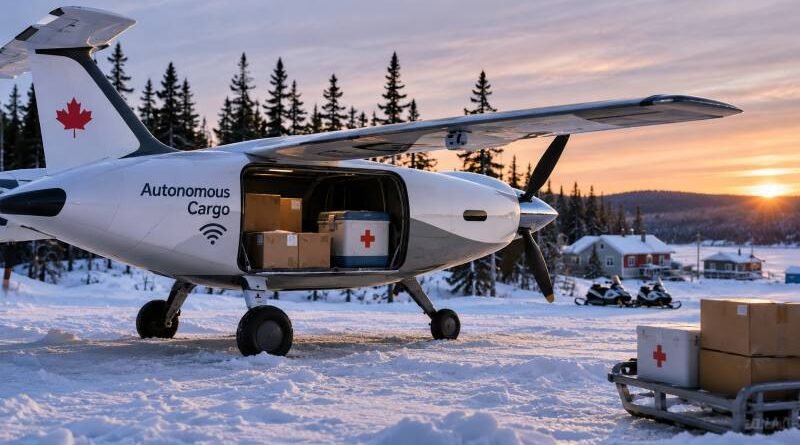
Canada Advances Autonomous Aviation to Deliver Essential Supplies to Remote Communities
Canadian startups are developing pilotless aircraft designed to transform essential supply deliveries, reduce transportation costs, and improve access to isolated communities across the country.

Aviation Innovation Tackles Geographic Challenges
Canada is entering a new chapter in aviation technology as emerging companies develop autonomous aircraft capable of transporting food, medicine, and essential goods to communities where conventional transportation remains difficult or prohibitively expensive.
The initiative offers a promising alternative for remote northern regions, where residents frequently depend on traditional air services for everyday necessities. Vast distances, unpredictable weather conditions, and high operating expenses have long complicated supply chains, making reliable deliveries a persistent challenge.
Canadian Startups Lead the Autonomous Aviation Revolution
Among the companies pioneering this transformation is Ribbit, a Waterloo-based technology startup developing systems that enable conventional aircraft to operate autonomously.
Its innovative approach integrates advanced navigation technologies, intelligent sensors, and sophisticated software designed to support flight operations with progressively less direct human intervention.
The company has collaborated with Canadian federal authorities, including Transport Canada, on initiatives exploring the operational feasibility and safety of autonomous aviation.
These developments reflect Canada’s growing ambition to establish itself as a competitive force in next-generation aerospace technology.
Lower Costs and Greater Logistics Efficiency
One of the most compelling advantages of autonomous aircraft is their potential to optimize transportation resources.
By eliminating the requirement for an onboard pilot, smaller aircraft could allocate additional capacity to cargo while enabling more flexible delivery schedules.
Automated flight operations could also facilitate more frequent shipments of fresh produce, medical supplies, and everyday consumer goods to underserved communities.
Such improvements could eventually reduce transportation expenses, strengthen food security, and enhance the reliability of regional supply networks.
However, widespread commercial deployment will depend on regulatory approvals, rigorous safety evaluations, and continued technological development.
An Emerging Industry With Global Potential
Beyond addressing domestic transportation challenges, autonomous aviation presents substantial opportunities for Canada’s technology and aerospace industries.
Advancements in artificial intelligence, aircraft engineering, automated logistics, and navigation systems could attract investment while supporting specialized employment and innovation.
The technology may also find applications in emergency response, disaster relief, environmental monitoring, and essential cargo transportation in regions with limited infrastructure.
For a country characterized by immense geographic distances, autonomous aviation could become a strategic advantage with international commercial potential.
The Future of Air Transportation Takes Shape
Although technical, operational, and regulatory obstacles remain, Canadian aviation startups are demonstrating how emerging technologies could reshape the movement of essential goods.
The significance of these developments extends beyond aircraft automation. Their greatest potential lies in improving access to critical supplies for communities that have historically faced considerable logistical disadvantages.
As Canada continues exploring pilotless aviation, autonomous aircraft could become an important component of a more efficient, resilient, and accessible transportation network—opening new possibilities for both remote communities and the global aerospace industry.
