

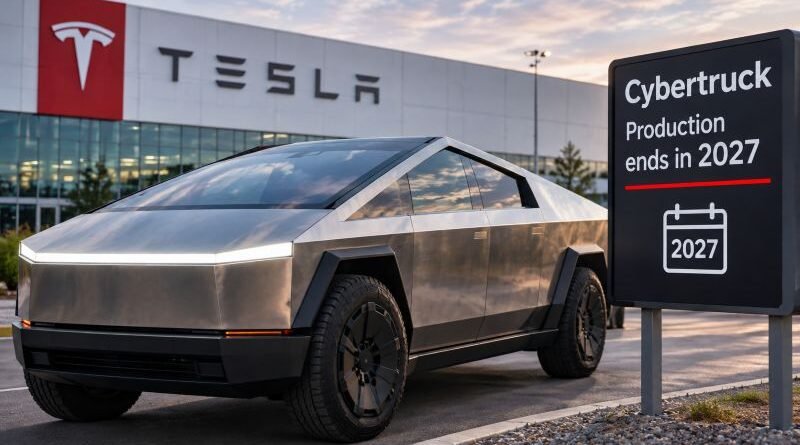
Tesla Cybertruck Nears the End as Weak Sales Drive a Major Strategic Shift
Tesla is preparing to end Cybertruck production in Texas during 2027 as the company redirects resources toward Cybercab, its autonomous vehicle project. However, the decision also reflects the commercial challenges facing a pickup truck that once promised to revolutionize the automotive industry.
Automotive Industry | Technology & Business
The Tesla Cybertruck is approaching the end of its production run in the United States. Elon Musk’s company plans to discontinue manufacturing the electric pickup truck at its Texas facility during 2027. The decision reflects a broader corporate strategy focused on autonomous vehicles. Initially, Tesla expected production to conclude around mid-2027. However, Musk subsequently extended the timeline until late summer to fulfill outstanding orders. The announcement represents a significant turning point for the American automaker. Moreover, it highlights the difficulties of transforming an innovative vehicle into a commercially successful product. An analysis published by The Wall Street Journal examines the factors behind Tesla’s decision. These include disappointing sales, high manufacturing costs, and production challenges.
Tesla Cybertruck: From Revolutionary Promise to an Uncertain Future
Tesla unveiled the Cybertruck in November 2019. From the beginning, its futuristic design attracted considerable international attention. The pickup featured a stainless-steel exterior and unconventional geometric lines. Additionally, Tesla promised exceptional durability, advanced technology, and competitive performance. Elon Musk positioned the vehicle as an alternative to traditional pickups manufactured by Ford and General Motors. However, the project encountered difficulties during its early development. Manufacturing delays postponed initial deliveries until November 2023. By then, automotive market conditions had changed considerably. Furthermore, final vehicle prices exceeded initial expectations. This difference limited accessibility for many potential buyers. Consequently, Cybertruck evolved from a relatively affordable electric pickup concept into a premium vehicle targeting consumers with greater purchasing power.
Cybertruck Sales Fall Significantly Below Expectations
Commercial performance became one of the project’s most important challenges. During its early development, Musk suggested that annual production could approach 250,000 vehicles. However, actual sales never reached that target. According to Kelley Blue Book estimates, Tesla sold 38,965 Cybertrucks in the United States during 2024. In 2025, sales declined to 20,237 units. This represented a decrease of approximately 48%. Moreover, demand continued weakening throughout 2026. Motor Intelligence estimates indicated that sales declined 28% during the first nine months of the year. Consequently, Tesla faced a substantial gap between its manufacturing capacity and actual consumer demand. This situation eventually prompted the company to reconsider the vehicle’s long-term production strategy.
High Prices Limited Cybertruck’s Commercial Appeal
One of Cybertruck’s greatest obstacles was its purchase price. When Tesla introduced the vehicle, the company advertised an entry-level version costing less than $40,000. However, the first production models arrived with significantly higher prices. This difference disappointed some prospective buyers. Furthermore, it reduced the vehicle’s competitiveness against conventional pickup trucks. Tesla later introduced additional configurations and pricing adjustments. Nevertheless, these measures failed to generate the expected sales volume. Cybertruck maintained a loyal following among consumers interested in technology and distinctive design. However, it struggled to attract mainstream American pickup buyers. Meanwhile, elevated manufacturing costs made it difficult for Tesla to offer more affordable versions without affecting profitability.
Manufacturing Challenges and Quality Concerns Affected the Model
The Cybertruck encountered several technical challenges related to its design and construction. Its stainless-steel body required specialized manufacturing processes. Additionally, the unconventional structure complicated certain industrial procedures. Since deliveries began, Tesla has addressed several quality-related concerns. Some vehicles experienced problems involving mechanical components, electronic systems, and exterior panels. According to Reuters, Cybertruck accumulated 11 recall campaigns following its commercial introduction. Several issues could be resolved through software updates. However, others required physical repairs. These developments increased attention on the vehicle’s reliability and safety. Furthermore, they created additional costs for the manufacturer. Although recalls are common throughout the automotive industry, repeated problems can influence consumer confidence and purchasing decisions.
Electric Pickup Trucks Face Growing Challenges in the United States
Cybertruck’s commercial difficulties reflect broader developments within the American automotive market. During recent years, several manufacturers invested heavily in fully electric pickup trucks. Ford, General Motors, and other companies introduced models designed to compete in this emerging segment. However, consumer demand has fallen below some early industry projections. Purchase prices remain a significant obstacle. Additionally, buyers consider driving range, towing capacity, and charging infrastructure before making decisions. These factors are particularly important in the United States. Many pickup owners depend on their vehicles for work, transporting equipment, and traveling long distances. Therefore, electric alternatives must demonstrate practical advantages over conventional models. Tesla’s experience illustrates that technological innovation must also address the everyday needs of consumers.
Elon Musk Shifts Tesla’s Strategic Priorities
The decision to reduce Cybertruck production forms part of a broader transformation within Tesla. Elon Musk increasingly wants the company to focus on artificial intelligence, robotics, and autonomous driving technology. Consequently, Tesla is directing more resources toward these areas. One of its most important projects is Cybercab, a vehicle designed to provide transportation without a human driver. Tesla believes autonomous mobility could create substantial commercial opportunities. Furthermore, Musk has repeatedly identified robotaxis as a central component of the company’s future. For this reason, Tesla plans to redirect manufacturing capacity previously allocated to Cybertruck toward Cybercab production. The move reflects a significant change in the automaker’s priorities. Rather than focusing exclusively on electric vehicle sales, Tesla is pursuing new business models based on automation and transportation services.
Cybercab Becomes Tesla’s Next Major Technology Investment
Cybercab represents a different approach to personal transportation. The vehicle was developed to operate through autonomous driving systems. Its design eliminates conventional controls such as a steering wheel and pedals. Tesla began offering paid rides using a small fleet of these vehicles in Austin during September 2026. However, the project continues to face important challenges. American authorities are reviewing safety requirements associated with autonomous transportation. Additionally, Tesla must demonstrate that its technology can operate reliably under different traffic conditions. Meanwhile, commercial production remains at an early stage. Consequently, Cybercab represents both a growth opportunity and a substantial financial commitment. Its success will depend on technological progress, regulatory approval, and consumer acceptance.
Cybertruck’s Public Image Generated Divided Opinions
Since its introduction, Cybertruck has become one of the world’s most recognizable vehicles. Its futuristic appearance attracted enthusiastic Tesla supporters. However, the unconventional design also generated criticism among traditional automotive consumers. Some viewed the vehicle as a major step forward in automotive innovation. Others questioned its practicality and exterior features. Additionally, Elon Musk’s political activities intensified controversies surrounding the Tesla brand. In recent years, the company has faced protests and consumer backlash associated with its chief executive’s public positions. Although the precise impact on Cybertruck sales is difficult to measure, these developments added pressure to Tesla’s commercial reputation. Consequently, Cybertruck became associated with both technological innovation and public controversy.
Tesla Extends Cybertruck Production Through Late Summer 2027
Cybertruck’s immediate future changed following Tesla’s initial announcement. On November 6, Musk indicated that production would be reduced around mid-2027. Subsequently, he announced an extension through late summer. According to the executive, Tesla requires additional time to fulfill outstanding customer orders. However, the revised timeline does not change the company’s broader strategy. Tesla continues preparing to redirect manufacturing capacity toward Cybercab. So far, the automaker has not confirmed plans to transfer Cybertruck production to another facility. It has also not announced a next-generation version of the pickup. Therefore, the vehicle’s future beyond 2027 remains uncertain.
Tesla’s Strategic Transformation Creates New Business Challenges
The decision comes during a period of significant change across the automotive industry. Manufacturers face increasing competition in electric vehicles, software, and artificial intelligence. Additionally, consumers are paying greater attention to purchase prices and ownership costs. Tesla hopes to distinguish itself through autonomous technology. However, this strategy requires substantial investment and sustainable commercial results. The company must also maintain its competitiveness in the conventional electric vehicle market. Models such as the Model 3 and Model Y remain essential to its automotive operations. Consequently, Tesla must balance its existing businesses with ambitious technology projects. Autonomous transportation could create new revenue opportunities. Nevertheless, its financial benefits will depend on successful execution and market acceptance.
Tesla’s Future Will Depend on Turning Innovation Into Sustainable Growth
Cybertruck’s history illustrates the challenges associated with ambitious automotive projects. The vehicle achieved international recognition and generated considerable early enthusiasm. However, weaker-than-expected sales limited its commercial expansion. Additionally, elevated prices and manufacturing difficulties complicated its development. Tesla now intends to use its technological expertise to develop a new generation of mobility services. Cybercab occupies a central position in that strategy. The company’s primary challenge will be transforming technological advances into profitable, safe, and commercially sustainable products. Meanwhile, Cybertruck will retain a distinctive place in Tesla’s history. Its design and innovations demonstrated the automaker’s willingness to challenge industry conventions. However, its commercial difficulties also showed that revolutionary products require sustained consumer demand. The transition planned for 2027 will mark another important chapter for Tesla. Furthermore, it will test Elon Musk’s vision for the future of autonomous transportation.
