
Spain Wealth Tax: Sánchez Pledges Levy on Fortunes Over €100m
Spain’s Prime Minister Pedro Sánchez on Monday pledged a new wealth tax on fortunes worth more than €100 million, promising to put the money into housing, pensions, a child-rearing benefit and public services if his Socialist Party (PSOE) wins the general election on 29 November. The proposal, announced six days before polling day, is a campaign commitment rather than a government decision, and no tax rate has yet been published.
Sánchez presented the plan in a video and message on his social media accounts on the morning of 23 November, while the PSOE sent a statement to the media setting out the details, according to El Nacional, El Debate and El Diario de Madrid. The party estimates the levy would raise around €2 billion a year.
What the Spain wealth tax proposal includes
The PSOE has added the measure to its election programme. Based on what the party has released so far, the key points are:
- Threshold: only personal fortunes above €100 million would be taxed.
- Revenue: the party projects about €2 billion a year. This is a party estimate, not an official forecast from the Finance Ministry or the tax agency.
- Use of the money: a new child-rearing benefit, more investment in housing, including protected (subsidised) housing, support for pensions and better public services.
- Who is excluded: the PSOE says the tax would not affect the middle classes, savers or small and medium-sized business owners.
The party has not said what rate would apply, how assets would be valued, how many taxpayers would be covered or when the tax could take effect. It has also not explained how the new levy would sit alongside Spain’s existing regional wealth tax and the solidarity tax on large fortunes that the current government introduced in 2022.
Why Sánchez is campaigning on tax justice
In his message, Sánchez argued that the richest 0.1% of Spaniards hold more than 10% of the country’s wealth, a share the PSOE says has grown since 2010. He closed with the line “Que los millones también se traduzcan en derechos”, which translates as “Let the millions also translate into rights.”
The PSOE statement said the party wants those who have the most to pay their fair share and presented the levy as a tax on a few people that would improve the lives of millions. The party also said it wants Spain to be at the forefront of tax justice and that it supports a global minimum tax on large fortunes in Europe and internationally. It argued that some very wealthy individuals take advantage of the limits of the current tax system.
The announcement came two days after Sánchez said he would extend Spain’s temporary tax on banks, which El Debate reported would be used to fund housing policy. Together, the two pledges put taxation of banks and the very wealthy at the centre of the Socialists’ final campaign week.
What it means for households and the election
For most households, the proposal would not change their own tax bills. Its relevance lies in where the money would go: housing costs have become one of the central issues in Spanish politics, and the PSOE is linking the new revenue directly to housing supply and family support.
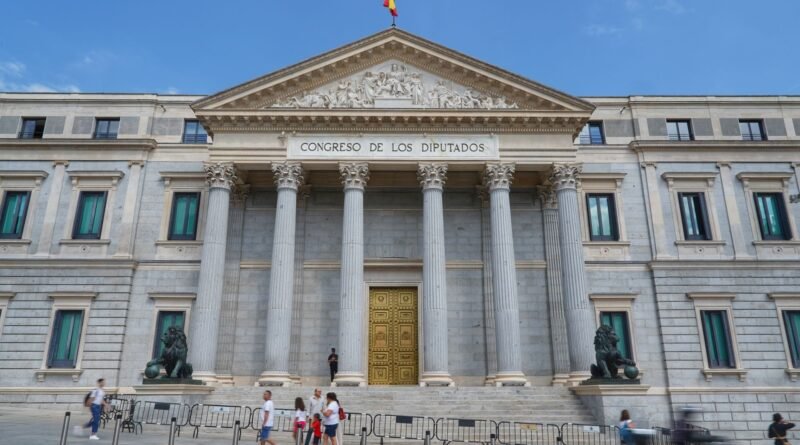
Whether the tax ever becomes law depends on the outcome on 29 November and on the next parliament. A Target Point poll highlighted by El Debate shows the PSOE and the conservative Popular Party (PP), led by Alberto Núñez Feijóo, competing for first place, while the combined right-wing bloc of the PP and Vox remains on course for an absolute majority. A new tax would need to pass the Congress of Deputies, so a PSOE-led government would require support from other parties.
Spain’s recent policy decisions have repeatedly drawn attention across Europe, including the freeze on foreign degree recognition for doctors announced last week.
What happens next
The campaign ends on Friday, 27 November, followed by a day of reflection before voting on Sunday. Details such as the tax rate, the valuation rules and the timetable would only be set out in draft legislation after a new government is formed. Until then, the €100 million threshold and the €2 billion revenue estimate remain campaign figures.
Featured image: Toni.063371 – Antonio Sáez / Pexels (Pexels License).