
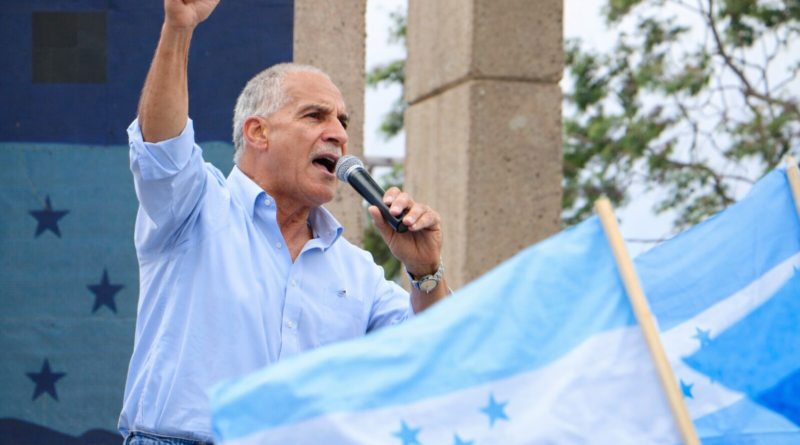
Nasry Asfura Wins The Election in Honduras 2026-2030
🔴 Honduras Has a President 2026-2030 Following Completion of Electoral Process
Tegucigalpa, Honduras — Honduras has officially concluded its 2025 General Elections after the National Electoral Council (CNE) finalized the special review of remaining electoral tally sheets. With this milestone reached, Honduras has a president for the 2026–2030 constitutional term, marking the end of a highly competitive and closely monitored electoral cycle.
The confirmation of the final results brings clarity to the national political landscape and initiates the transition toward the next presidential administration. Electoral authorities emphasized that the process adhered strictly to constitutional mandates, electoral law, and established verification procedures.
📊 Special Vote Count and Legal Verification Process
The special vote count focused on tally sheets that were flagged during the preliminary phase due to numerical inconsistencies, incomplete documentation, missing signatures, or technical observations identified by electoral systems.
Each reviewed tally sheet underwent both manual and digital verification, ensuring accuracy and compliance with legal standards. This multi-layered review mechanism is designed to safeguard the integrity of the vote and reinforce confidence in the final outcome.
📺 Transparency, Public Oversight, and Electoral Confidence
Transparency remained a central pillar of the electoral process. Throughout the special review, proceedings were conducted under public observation, allowing political parties, civic organizations, and the general population to follow developments in real time.
Electoral officials reiterated that openness and accountability are essential to maintaining democratic legitimacy, particularly in closely contested elections. The public nature of the review process played a key role in reinforcing trust in the institutional framework.
🗳️ A Defining Electoral Cycle for Honduras
The 2025 General Elections are widely regarded as one of the most competitive electoral processes in Honduras’ recent history. High voter participation, intense political debate, and a narrow margin between leading candidates underscored the significance of every ballot cast.
The conclusion of the electoral review confirms that the democratic process functioned within constitutional boundaries, ensuring that the collective will of Honduran voters was accurately reflected in the final results.
🏛️ Transition Toward the 2026–2030 Administration
With the electoral process formally completed, attention now shifts to the transition phase leading into the 2026–2030 presidential term. This period is expected to involve institutional coordination, policy planning, and administrative preparations to ensure continuity of governance.
Political stability during this transition is considered critical for maintaining economic confidence, public order, and institutional continuity. Authorities have called for respect, dialogue, and adherence to democratic norms as the country moves forward.
🌍 Institutional Stability and Economic Outlook
From a broader perspective, the confirmation of electoral results provides a framework of certainty for national and international stakeholders. Clear electoral outcomes contribute to predictability in governance, public policy direction, and long-term development planning.
Analysts note that institutional clarity following elections is a key factor in strengthening investor confidence, reinforcing the rule of law, and supporting sustainable economic growth.
🤝 Institutional Perspective from MB Daily News
MB Daily News emphasizes the importance of transparent democratic processes as a foundation for national stability and development. The completion of the electoral cycle demonstrates the role of institutions in upholding constitutional order and public trust.
As Honduras enters a new political chapter, the conclusion of the 2025 elections serves as a reminder that democratic continuity depends on respect for institutions, civic participation, and the peaceful resolution of political competition.