
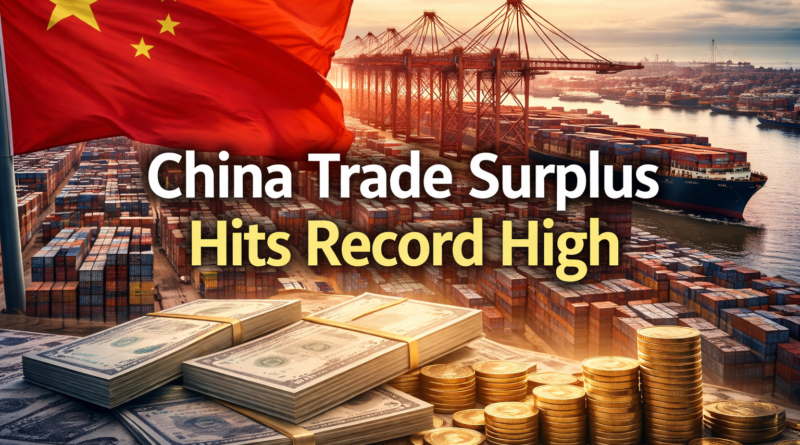
China Posts Record $1.2 Trillion Trade Surplus in 2025 Despite U.S. Tariffs
January 14, 2026 | MB Daily News | Los Angeles CA
China Posts Record $1.2 Trillion Trade Surplus in 2025 Despite U.S. Tariffs
China reported its largest annual trade surplus on record for 2025, even as U.S. tariffs remained in place throughout the year. The surplus topped $1.2 trillion, driven largely by robust exports and tightening control on imports.
Analysts said sustained demand for Chinese manufactured goods helped offset pressure from U.S. duties. Meanwhile, consumption patterns in Europe and Asia also contributed to strong export figures.
Chinese officials pointed to gains in high-tech sectors such as electronics and renewable energy components. These segments outpaced slower growth in traditional commodities.
The expanding surplus continues a trend of widening global trade imbalances. For perspective, the U.S. trade deficit widened at the same time, reflecting strong import demand.
Some economists believe the data signals structural advantages for China in global supply chains. Others caution that geopolitical tensions may shape future trade flows.
Get a quick mortgage rate today
See current mortgage financing and refinance options quickly. Find a rate that fits your goals and budget.
Trade with the United States remains a focal point of economic discussion. U.S. officials have repeatedly cited structural concerns even as both nations benefit from deep commercial ties.
In December, China’s exports rose faster than expected, although import growth lagged. This imbalance contributed heavily to the overall surplus figure.
Economists noted that global inventory restocking and end-of-year demand often influence seasonal trade patterns. Still, the overall trend suggests resilience in China’s export sector.
For more context on economic pressures shaping markets, see our coverage of inflation trends: December Inflation Consumer Price Index .
Moving into 2026, economists will closely watch how trade dynamics evolve as global demand shifts. Tariffs, currency fluctuations, and supply chain adjustments may all play a role.
MB Daily News 2026 Copyright – All Rights Reserved.