
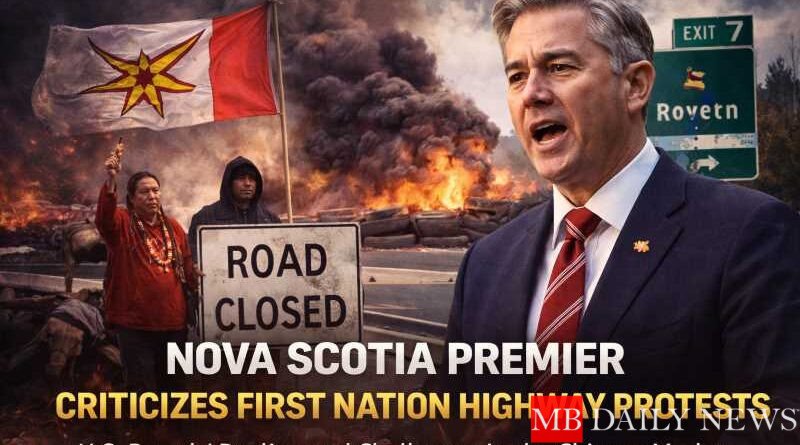
Nova Scotia Premier Criticizes First Nation Highway Protests
MB DAILY NEWS | Raleigh, NC.
First Nation highway protests: Nova Scotia Premier Tim Houston expressed strong disapproval of recent protests by First Nations regarding cannabis enforcement actions. His comments came in a statement shared on social media. The protests involved blockades on multiple highways across the province. These actions arose in response to the RCMP’s seizure of cannabis products from First Nations dispensaries. The situation highlights ongoing tensions between provincial authorities and Indigenous communities. Observers are keen to see how this conflict will evolve in the coming days.
Background of the Protests
First Nations communities in Nova Scotia have voiced their frustrations over cannabis regulations. The recent RCMP raids on dispensaries sparked significant backlash. Many community members view these actions as an infringement on their rights. The protests aimed to draw attention to their grievances and assert their sovereignty. This situation underscores the complexities surrounding cannabis legislation in Indigenous territories. Stakeholders are watching closely for any developments that may arise from these tensions.
Government Response
Premier Houston’s remarks reflect a broader governmental stance on the issue. He emphasized the need for respect towards law enforcement agencies like the RCMP. His statement suggests a desire to maintain order and uphold the law. However, it also raises questions about the government’s approach to Indigenous rights. The balance between enforcing laws and respecting community autonomy remains delicate. Future discussions may focus on finding common ground between authorities and First Nations.
Community Perspectives
Many Indigenous leaders have expressed their disappointment with the government’s actions. They argue that the blockades are a necessary response to perceived injustices. Community members feel that their voices are often overlooked in policy discussions. The protests serve as a platform for raising awareness about their rights and needs. Understanding these perspectives is crucial for fostering dialogue. The ongoing situation may prompt further conversations about reconciliation and respect.
Impact on Local Infrastructure
The highway blockades have disrupted transportation and commerce in the region. Local businesses and commuters have faced significant delays due to the protests. This disruption raises concerns about the economic implications for affected communities. Authorities must consider the balance between law enforcement and community relations. The impact on infrastructure may lead to calls for alternative solutions. Observers are interested in how these challenges will be addressed moving forward.
Future Implications
The outcome of this situation could set a precedent for future interactions between the government and Indigenous communities. How authorities respond may influence public perception and trust. Continued protests could escalate tensions and lead to further confrontations. Alternatively, constructive dialogue might pave the way for improved relations. The stakes are high for both the government and First Nations. Stakeholders are eager to see how this conflict unfolds in the coming weeks.
Next Steps for Dialogue
Moving forward, open communication will be essential in resolving these issues. Both sides must engage in meaningful discussions to address grievances. Finding a path toward mutual understanding could benefit all parties involved. The government may need to reassess its approach to Indigenous rights and cannabis regulation. Building trust will require transparency and a willingness to listen. The community’s response will likely shape the future of these negotiations.