

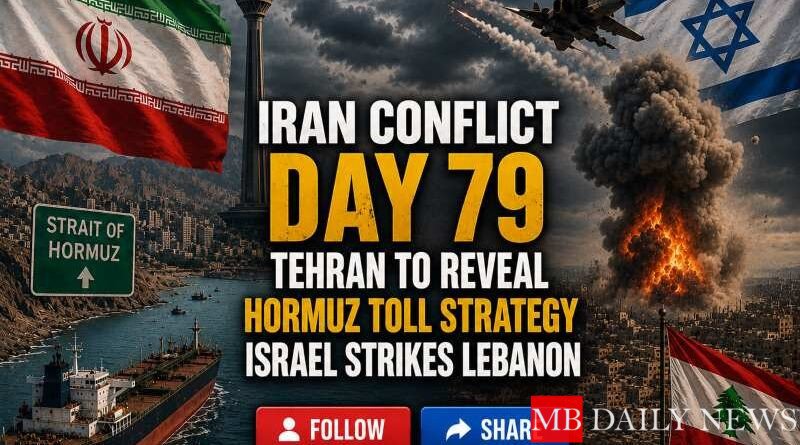
Iran Conflict Day 79: Tehran to Reveal Hormuz Toll Strategy; Israel Strikes Lebanon
MB DAILY NEWS | Raleigh, NC.:
Iran Conflict Day 79: As the Iran conflict reaches day 79, significant developments emerge from both Tehran and Israel. Tehran plans to unveil a new toll strategy for the Strait of Hormuz. This strategic waterway is crucial for global oil shipments and regional trade. Meanwhile, Israel has intensified its military actions, conducting airstrikes in Lebanon. These developments highlight the escalating tensions in the region. Observers are closely monitoring the implications of these actions on regional stability. Explorez des offres liées aux thèmes évoqués ici.
Tehran’s Hormuz Toll Strategy
Tehran’s announcement regarding the Hormuz toll plan raises questions about its impact on maritime traffic. The Strait of Hormuz is a vital passage for oil exports from the Gulf states. Implementing a toll could alter shipping routes and increase costs for oil companies. This move may also be seen as a way for Iran to assert its influence over the region. Stakeholders in the oil market are likely to react to these developments. The international community will watch closely to gauge the potential fallout. Découvrez aussi des séjours et des repères utiles autour du sujet.
Israel’s Military Actions
Israel’s recent airstrikes in Lebanon mark a significant escalation in its military operations. These strikes reportedly target militant positions, reflecting Israel’s ongoing security concerns. The Lebanese government and Hezbollah may respond to these actions, potentially escalating tensions further. Regional analysts suggest that such military actions could provoke retaliation. The situation remains fluid, with potential implications for broader regional dynamics. Observers are concerned about the risk of a wider conflict.
Regional Implications of the Conflict
The ongoing Iran conflict significantly impacts regional geopolitics and alliances. Countries in the Gulf are increasingly wary of Iran’s actions and military capabilities. The potential for increased hostilities could reshape alliances and security arrangements. Neighboring nations may reconsider their defense strategies in light of these developments. The conflict’s trajectory will influence diplomatic relations across the Middle East. Stakeholders must navigate these complexities to maintain stability.
International Reactions
Global powers are closely monitoring the situation as tensions escalate in the Middle East. The United States and European nations have expressed concerns about Iran’s military ambitions. Diplomatic efforts may intensify to prevent further escalation and promote dialogue. International stakeholders are likely to engage in discussions to address the conflict’s root causes. The response from major powers could influence the conflict’s future trajectory. Observers anticipate a range of diplomatic maneuvers in the coming days.
Economic Consequences
The conflict’s ongoing nature raises concerns about economic stability in the region. Oil prices may experience volatility due to uncertainties surrounding the Strait of Hormuz. Increased military actions could disrupt trade routes and impact global markets. Investors are likely to react to developments, leading to fluctuations in energy stocks. The economic implications extend beyond the region, affecting global supply chains. Stakeholders must prepare for potential disruptions in the coming weeks.
What to Watch Next
As the Iran conflict continues, key developments will shape the region’s future. Tehran’s toll strategy and Israel’s military actions will be critical focal points. Observers should monitor responses from neighboring countries and international powers. The potential for diplomatic initiatives may emerge as tensions rise. Stakeholders must remain vigilant to assess the evolving landscape. The next few weeks will be crucial in determining the conflict’s trajectory and regional stability.
Copyright © 2026 MB Daily News. All Rights Reserved.