
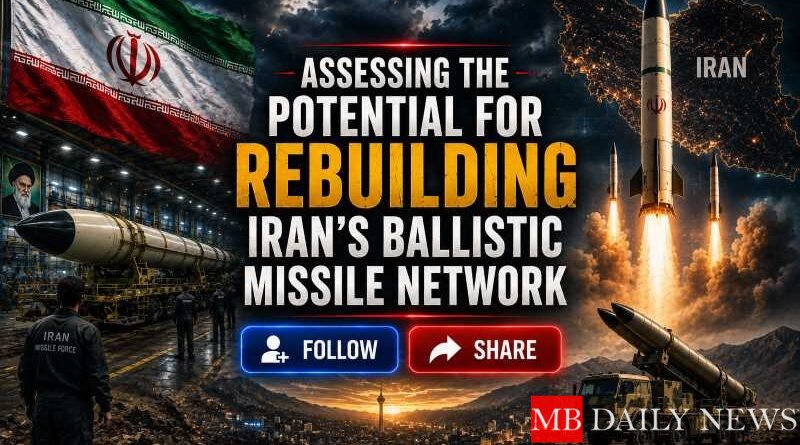
Assessing the Potential for Rebuilding Iran’s Ballistic Missile Network
MB DAILY NEWS | Raleigh, NC.:
Iran’s ballistic missile network plays a crucial role in its defense strategy and regional influence. Recent discussions focus on the potential for rebuilding this network. Stakeholders are keenly observing how Iran might enhance its capabilities. The implications of such developments could significantly impact regional security dynamics. Analysts suggest that a stronger missile network could embolden Iran’s proxy forces. This situation warrants close attention from neighboring countries and global powers. Explorez des offres liées aux thèmes évoqués ici.
Strategic Importance of Ballistic Missiles
Ballistic missiles serve as a deterrent and a means of projecting power. Iran views its missile program as essential for national security. The ability to strike distant targets enhances its leverage in geopolitical negotiations. A robust missile network can also deter adversaries from military action. Observers note that Iran’s missile capabilities have evolved significantly over the years. This evolution raises concerns among regional rivals and international stakeholders. Découvrez aussi des séjours et des repères utiles autour du sujet.
Challenges in Rebuilding Efforts
Rebuilding Iran’s ballistic missile network faces numerous challenges. Economic sanctions have severely limited access to advanced technology and materials. Additionally, international scrutiny complicates Iran’s efforts to enhance its missile capabilities. The country must navigate a complex landscape of diplomatic relations. Internal political dynamics also influence decision-making regarding military investments. These factors create uncertainty about the pace and scale of any rebuilding initiatives.
Impact on Regional Stability
Strengthening Iran’s missile capabilities could destabilize the Middle East further. Neighboring countries may feel compelled to enhance their own military capabilities in response. This arms race could lead to increased tensions and potential conflicts. Regional alliances may shift as countries reassess their security strategies. The balance of power in the region is already fragile, and further escalation could have dire consequences. Observers are closely monitoring how these developments unfold.
Proxy Networks and Their Role
Iran’s proxy networks play a significant role in its regional strategy. These groups often serve as extensions of Iran’s military capabilities. Strengthening the ballistic missile network could empower these proxies further. Enhanced capabilities may enable them to conduct operations with greater precision. This situation raises concerns about the potential for increased hostilities. Regional actors must consider the implications of a more capable Iranian proxy network.
International Reactions and Responses
Global powers are closely watching Iran’s missile developments. The United States and its allies have expressed concerns about regional security. Diplomatic efforts may intensify to curb Iran’s missile ambitions. Sanctions and negotiations could become focal points in international discussions. The response from countries like Israel and Saudi Arabia will also be critical. Their strategies will likely evolve in light of Iran’s potential advancements.
Future Outlook and Considerations
The future of Iran’s ballistic missile network remains uncertain. Various factors will influence its trajectory, including international relations and domestic politics. Stakeholders must remain vigilant as developments unfold. The potential for increased military capabilities could reshape the regional landscape. Observers should consider both the risks and opportunities that may arise. Ongoing analysis will be essential to understand the broader implications for the Middle East.
Copyright © 2026 MB Daily News. All Rights Reserved.