
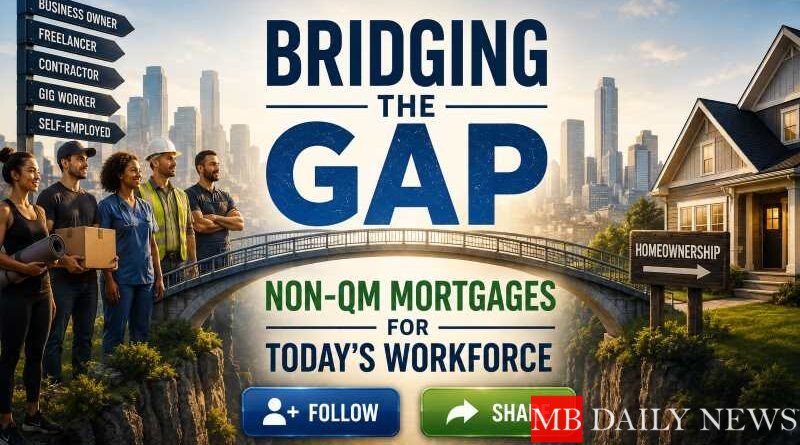
Bridging the Gap: Non-QM Mortgages for Today’s Workforce
MB DAILY NEWS | Raleigh, NC.
As the American workforce evolves, the financial systems that support it must evolve as well. More workers are leaving traditional employment and choosing freelance careers, gig work, or entrepreneurship. Consequently, the mortgage industry faces increasing pressure to rethink long-standing lending standards. In particular, many experts now question whether Qualified Mortgage (QM) guidelines still reflect today’s workforce realities.
In a recent investigative report for MB Daily News, I examined the challenges modern workers face when seeking home financing. One example involved a wedding photographer who built a successful business from the ground up. Although she maintained responsible financial habits and generated consistent income, conventional mortgage requirements left her with few financing options.
The Limitations of Traditional Mortgage Systems
The Qualified Mortgage framework primarily serves borrowers with stable, salaried income documented through W-2 forms. However, many modern workers earn income through multiple sources or experience seasonal fluctuations. As a result, traditional underwriting standards often fail to capture their true financial strength.
When the photographer applied for a mortgage, lenders focused heavily on her unconventional income structure. Meanwhile, they gave less weight to her strong financial management and growing business performance. Consequently, she struggled to qualify despite demonstrating financial stability.
This situation highlights a significant gap in the mortgage system. Too often, outdated criteria prevent otherwise qualified buyers from accessing homeownership opportunities.
“Telling a borrower like her that she doesn’t qualify is more than a transactional failure; it signals a systemic gap that needs addressing.”
Moreover, this case reflects a broader national conversation about how lenders evaluate self-employed borrowers and independent workers.
The Rise of Non-QM Mortgages
As workforce trends continue to change, Non-QM mortgages have emerged as an alternative solution. These loan products serve borrowers whose financial profiles do not fit traditional lending models. Rather than relying solely on standard documentation, lenders can evaluate applicants using broader measures of financial health.
For example, many Non-QM programs consider bank statements, business revenue, asset reserves, and alternative income verification methods. Therefore, these products create opportunities for borrowers who might otherwise fall outside conventional guidelines.
Why This Matters
Expanding access to Non-QM mortgages benefits more than individual borrowers. It also reflects a necessary evolution within the mortgage industry. By adapting to modern employment patterns, lenders can expand homeownership opportunities while supporting long-term economic growth.
Furthermore, greater lending flexibility helps ensure that qualified borrowers are not excluded simply because their income does not follow a traditional structure.
“The mortgage companies that adapt to this new landscape will not only capture a growing market but will also play a crucial role in empowering a diverse range of workers.”
A Broader Economic Context
At the same time, the growth of flexible employment represents more than a temporary trend. Instead, it reflects deeper shifts in economic structures and workplace preferences. The gig economy, remote work, and self-employment continue to reshape how people earn income.
As these changes accelerate, financial institutions must adapt their products and underwriting practices. Otherwise, they risk leaving a growing segment of the workforce underserved.
Impacts on Communities and Trust
Creating more inclusive lending options can also strengthen trust in financial institutions. When qualified borrowers gain fair access to mortgage products, they feel better represented within the financial system.
In addition, broader access to homeownership can promote community stability, increase household wealth, and support local economic development. Therefore, improving mortgage accessibility benefits both borrowers and the communities they serve.
Looking Ahead: A New Era of Lending
The rise of Non-QM mortgages marks an important turning point for the mortgage industry. As lenders recognize the diverse needs of today’s workforce, home financing will likely become more flexible and inclusive.
Ultimately, the industry has an opportunity to create a system that reflects modern employment realities. By embracing innovative lending solutions, mortgage providers can serve a wider range of borrowers while contributing to a stronger and more resilient economy.