

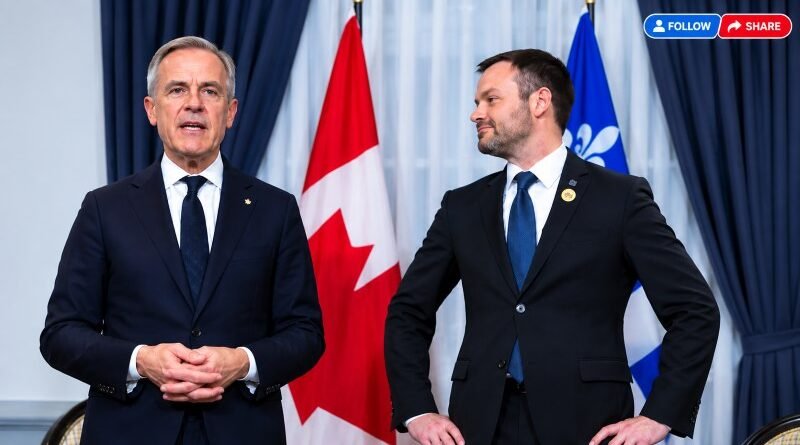
Quebec Premier Stands Firm on U.S. Outreach Following First Meeting With Mark Carney
Quebec Premier Paul St-Pierre Plamondon has reaffirmed his commitment to strengthening economic relations with the United States despite differences with Canada’s federal government. His first meeting with Prime Minister Mark Carney produced agreements on economic cooperation and social priorities, although disagreements over international trade representation remain unresolved.
Canada | International Politics & Economy
Quebec Premier Paul St-Pierre Plamondon has reaffirmed his intention to pursue direct diplomatic engagement with the United States following his first official meeting with Canadian Prime Minister Mark Carney.
The meeting took place on November 15 in Phnom Penh, Cambodia, during the Francophonie Summit. Although both leaders described their discussions as cordial and constructive, disagreements over Quebec’s role in international trade relations remain.
The talks followed several weeks of tension between Ottawa and Quebec’s newly elected provincial government. St-Pierre Plamondon believes stronger relationships with American officials are necessary to protect Quebec’s exports and economic interests.
Meanwhile, Carney maintains that formal international trade negotiations fall under federal jurisdiction. Nevertheless, both leaders acknowledged the importance of continued communication to address Canada’s economic and social challenges.
Quebec Maintains Its Diplomatic Strategy Toward the United States
Quebec’s government intends to strengthen relationships with American political and economic representatives through direct engagement with state officials. The initiative aims to promote commercial opportunities and reduce tensions surrounding tariffs on certain Canadian products. As part of this strategy, St-Pierre Plamondon sent letters to approximately 60 newly elected U.S. officials, emphasizing the economic connections between Quebec and their respective states. Furthermore, he proposed cooperation initiatives designed to benefit businesses and workers on both sides of the border. The provincial leader believes these discussions could help protect industries affected by trade restrictions. However, he has distinguished diplomatic outreach from formal treaty negotiations, which the federal government considers its responsibility.
Mark Carney Defends Federal Authority Over Trade Negotiations
Canadian Prime Minister Mark Carney maintains a different position regarding the country’s international representation. Carney believes trade negotiations must follow a coordinated federal strategy, particularly when dealing with the United States. According to the prime minister, major international trade decisions are negotiated between national governments. Nevertheless, he acknowledged that provincial governments may communicate with American representatives to express regional economic concerns. This distinction highlights the complexities of Canada’s federal system, where provinces exercise significant economic authority while Ottawa manages international agreements. Consequently, the challenge involves coordinating provincial interests without creating conflicting positions during negotiations with Washington.
First Meeting Between the Two Leaders Eases Political Tensions
The meeting in Cambodia represented an important step toward improving relations between the two leaders. St-Pierre Plamondon took office following Quebec’s October 5, 2026, provincial election but had not previously held a formal in-person meeting with Carney. Initially, the leaders disagreed over where their first meeting should take place, as Quebec’s premier preferred to welcome his federal counterpart in Quebec City. Eventually, they used their participation in the Francophonie Summit as an opportunity to meet. During their discussions, they addressed economic priorities, social challenges, and opportunities for cooperation. Additionally, they exchanged personal telephone numbers and agreed to maintain regular communication. Although their political differences remain, the meeting established a direct channel between both governments.
U.S. Tariffs Threaten Key Industries Across Quebec
American trade restrictions remain a significant concern for Quebec’s economy. Industries such as aluminum production, lumber, and manufacturing maintain close commercial relationships with the United States. Consequently, tariffs can affect export costs, business competitiveness, and investment decisions. St-Pierre Plamondon believes direct discussions with American state officials could help identify political and economic partners interested in reducing trade barriers. Furthermore, Quebec’s government wants to emphasize the importance of integrated supply chains connecting the province with several U.S. states. However, decisions involving federal tariffs and international trade agreements remain primarily under national authority. Therefore, meaningful progress will require coordination among Quebec, Ottawa, and Washington.

Canada’s Economy
Quebec Premier Paul St-Pierre Plamondon has reaffirmed his commitment to strengthening economic relations with the United States despite differences with Canada’s federal government.
Quebec Seeks New Trade Opportunities Following U.S. Elections
Quebec’s government believes the results of the November U.S. congressional elections could create new opportunities for diplomatic engagement. St-Pierre Plamondon announced an expanded outreach initiative after Democrats gained control of both chambers of Congress. In his assessment, the changing political environment could facilitate discussions with officials interested in reviewing certain trade restrictions. However, Carney has emphasized that the American executive branch continues to play the central role in international trade negotiations. This disagreement reflects two approaches to defending Canadian economic interests. While Quebec seeks broader political and regional connections, Ottawa prioritizes official negotiations with the U.S. administration. Both strategies could potentially complement each other through effective coordination.
Canada and Quebec Agree to Cooperate on Homelessness
One of the meeting’s concrete outcomes was a commitment to cooperate on addressing homelessness. St-Pierre Plamondon identified the issue as a major social priority for his administration and requested stronger coordination with Ottawa. According to the Quebec government’s statement, Carney agreed that the province should participate in selecting projects and coordinating federal resources dedicated to these initiatives. The agreement could help advance programs tailored to local needs, although implementation mechanisms still require further clarification. Additionally, both leaders recognized that cooperation between federal and provincial authorities is essential for addressing housing insecurity and social vulnerability. This understanding represents an early positive outcome in their institutional relationship.
Quebec Plans an International Economic Summit in 2027
Economic cooperation also featured prominently in the discussions. Quebec announced plans to organize an international gathering in 2027 involving economy ministers, trade officials, and business representatives from French-speaking countries. The initiative aims to strengthen investment opportunities and develop commercial relationships among participating economies. During the meeting, Carney expressed support for the proposal, which could help Quebec diversify its export markets. Furthermore, the event could provide opportunities for business networking and international investment partnerships. For Quebec’s government, commercial diversification represents an important strategy amid uncertainty surrounding relations with the United States. However, the summit’s long-term impact will depend on the agreements and investments that emerge from the discussions.
Differences Over Provincial Autonomy Remain Unresolved
Although the first meeting produced progress, disagreements concerning Quebec’s international role remain unresolved. St-Pierre Plamondon, leader of the Parti Québécois, supports greater political and economic autonomy for the province. In contrast, Carney emphasizes the importance of maintaining coordinated federal representation in international negotiations. These differences also influence discussions involving immigration, infrastructure, and participation in international organizations. The Canadian prime minister has noted that Quebec already possesses specific representation arrangements within certain institutions, including the International Organization of La Francophonie. However, the provincial government believes its participation should expand in matters directly affecting Quebec’s economy. Consequently, future discussions will need to address both shared economic priorities and longstanding institutional differences.
Ottawa and Quebec Enter a New Phase of Political Relations
The first meeting between Mark Carney and Paul St-Pierre Plamondon could mark the beginning of a more stable relationship between their governments. Although disagreements over international trade remain significant, both leaders identified areas where cooperation is possible. These include addressing homelessness, strengthening economic relationships, and organizing international business initiatives. Furthermore, they agreed to continue discussions in the coming weeks. Carney described their relationship as cordial and professional, while St-Pierre Plamondon emphasized the positive atmosphere of their meeting. Nevertheless, both governments must demonstrate that their commitments can produce meaningful results. Effective coordination will be particularly important amid trade tensions with the United States and broader economic challenges facing Canada.
Quebec Seeks to Protect Its Economy While Expanding Its International Influence
Quebec’s position reflects the importance of international trade to its economic development. The provincial government believes direct engagement with American partners and greater access to international markets are necessary to protect regional industries. Meanwhile, Ottawa maintains that formal trade negotiations must operate through a unified federal framework. The central challenge will be establishing cooperation mechanisms that protect Quebec’s economic interests without undermining Canada’s coordinated international trade strategy. The first meeting between Carney and St-Pierre Plamondon helped ease tensions and establish shared priorities. However, the future of their relationship will depend on their ability to transform dialogue into practical agreements. Amid continuing trade uncertainty, their decisions could have significant implications for Canadian businesses, workers, and investors.
