
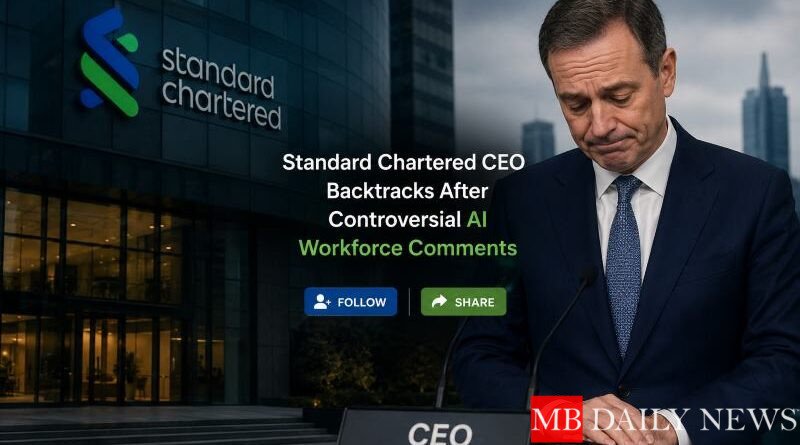
Standard Chartered CEO Backtracks After Controversial AI Workforce Comments
MB DAILY NEWS | Raleigh, NC.
Standard Chartered CEO Bill Winters is facing criticism after controversial comments about replacing what he described as “lower-value human capital” with artificial intelligence during discussions about the bank’s restructuring plans.
“The future of banking will rely heavily on automation and AI-driven efficiency,” Winters reportedly said while outlining the institution’s modernization strategy.
The remarks came as the global banking giant revealed plans that could lead to thousands of job cuts while expanding the use of AI technologies across several departments.
The comments quickly sparked backlash on social media and among industry analysts, with critics arguing that the language used diminished the value of employees and reflected growing concerns about corporate dependence on automation.
CEO Attempts to Clarify Comments After Public Reaction
Following the criticism, Winters sent an internal memo to employees on Wednesday in an effort to clarify his remarks and calm concerns inside the organization.
“Our people remain central to the success of Standard Chartered, and our transformation is about supporting long-term growth,” the memo reportedly stated.
The CEO acknowledged the strong reaction generated by his comments and emphasized that the bank continues to value its workforce despite ongoing technological changes.
The memo arrived less than 24 hours after the original statements circulated widely online, where many users accused the executive of treating employees as expendable in favor of artificial intelligence.
AI Transformation Continues Across the Banking Sector
The controversy highlights the growing tension between technological innovation and workforce stability as major financial institutions continue accelerating AI adoption.
Banks worldwide are increasingly implementing artificial intelligence for fraud detection, customer service automation, compliance monitoring, and advanced financial analysis.
“Artificial intelligence is reshaping the banking industry faster than many expected,” said one financial technology analyst following the controversy. “But the way leaders communicate these changes matters just as much as the technology itself.”
Experts warn that while AI can improve productivity and reduce operational costs, companies must remain careful about how they discuss workforce reductions linked to automation.
Public Concerns Over AI and Employment Grow
The incident has reignited broader concerns about how artificial intelligence could impact jobs across multiple industries in the coming years.
Critics argue that aggressive AI-driven restructuring strategies may damage employee morale and public trust if companies fail to balance efficiency with responsible leadership.
“Employees want transparency, but they also want respect,” one industry observer commented on social media. “Language like this creates fear about the future of work.”
Standard Chartered Pushes Forward With Digital Modernization
Despite the backlash, Standard Chartered continues investing heavily in digital transformation initiatives aimed at strengthening its global competitiveness.
The bank has expanded efforts in digital banking, AI-powered systems, and automation technologies designed to improve operational performance and customer experience.
As financial institutions increasingly integrate artificial intelligence into their business models, debates surrounding automation, employment, and ethical corporate communication are expected to intensify worldwide.