
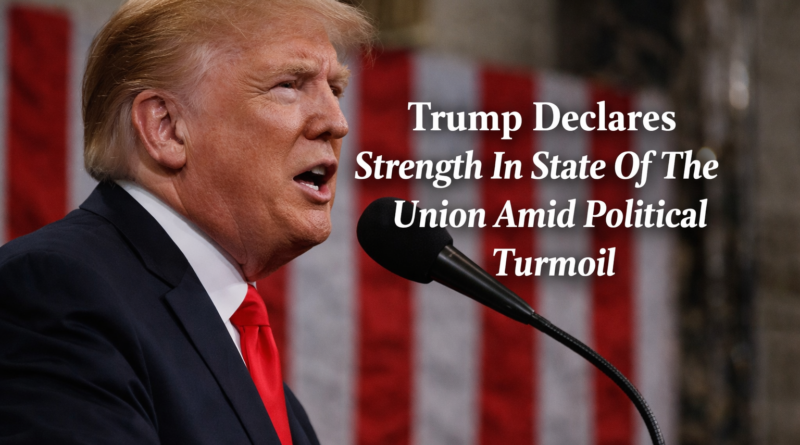
Trump Declares Strength In State Of The Union Amid Political Turmoil
MB DAILY NEWS | Raleigh, NC
President Trump asserted the strength of the State of the Union during his recent address. This declaration, however, contrasts sharply with the current state of political dialogue in the country. Many observers note that the tone and substance of political discussions have become increasingly divisive. The implications of this divide could affect future legislative efforts and public trust in government. As the political landscape evolves, the focus will likely shift to how leaders navigate these challenges. Understanding the dynamics at play will be crucial for voters and policymakers alike.
Political Discourse Under Scrutiny
The quality of political discourse has drawn significant attention in recent months. Analysts argue that the rhetoric used by leaders often exacerbates divisions rather than fostering unity. This trend raises questions about the effectiveness of communication strategies in addressing pressing national issues. Citizens increasingly express frustration over the lack of constructive dialogue. The challenge remains for politicians to engage in meaningful conversations that resonate with constituents. Observers will be watching closely to see if any leaders take steps to improve this situation.
Pentagon’s Stance on AI Usage
In a related development, the Pentagon has adopted a firmer stance regarding the use of artificial intelligence by military contractors. The Department of Defense is emphasizing the need for clear guidelines on how AI technologies should be integrated into military operations. This move reflects growing concerns about the ethical implications and potential risks associated with AI in defense settings. As military applications of AI expand, oversight will become increasingly important. Stakeholders will need to monitor how these policies evolve and their impact on defense strategies.
Implications for Legislative Action
The current political climate poses challenges for legislative action on key issues. Lawmakers may find it difficult to reach consensus on important policies amid rising tensions. This environment could hinder progress on initiatives that require bipartisan support. Observers anticipate that the upcoming sessions will reveal how effectively leaders can collaborate despite their differences. The ability to navigate these complexities will be crucial for achieving meaningful reforms. Future discussions will likely focus on finding common ground in a polarized atmosphere.
Public Sentiment and Political Leadership
Public sentiment plays a vital role in shaping political leadership and decision-making. As citizens express dissatisfaction with the current state of affairs, leaders must respond to these concerns. The disconnect between political rhetoric and public expectations could lead to significant electoral consequences. Understanding voter priorities will be essential for politicians aiming to maintain support. Engaging with constituents and addressing their needs may help bridge the gap in political discourse. Future elections will serve as a barometer for how effectively leaders adapt to these challenges.
Future of Political Engagement
The future of political engagement hinges on the ability of leaders to foster constructive dialogue. As the nation grapples with pressing issues, the need for collaboration becomes increasingly evident. Innovative approaches to communication may help restore trust in political institutions. Engaging diverse perspectives can enrich discussions and lead to more effective solutions. Observers will be keen to see how leaders adapt their strategies in response to public feedback. The evolution of political engagement will be a critical area to watch in the coming months.
Conclusion: Navigating a Complex Landscape
As the political landscape continues to shift, navigating these complexities will be essential for leaders. The juxtaposition of a strong State of the Union with a fragmented political discourse highlights the challenges ahead. Stakeholders must remain vigilant in monitoring developments that could impact governance and public trust. The interplay between political rhetoric and public sentiment will shape future discussions and decisions. Ultimately, the ability to foster unity in a divided environment will determine the effectiveness of political leadership. The coming months will be pivotal in shaping the trajectory of national politics.