
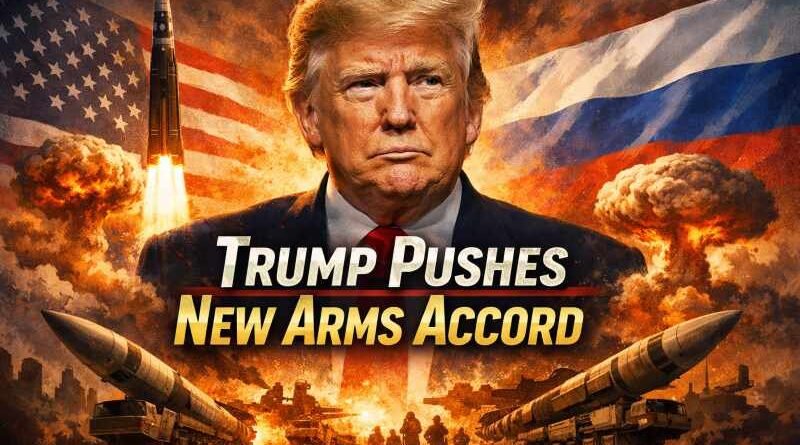
Trump Proposes New Strategic Arms Treaty Amid Nuclear Pact Expiration
MB DAILY NEWS | Raleigh, NC
Former President Trump has expressed a desire for the United States to engage in negotiations for a new strategic arms treaty. This announcement comes in the wake of the expiration of the last significant nuclear agreement with Russia. The call for a new treaty highlights ongoing concerns regarding global nuclear stability. Trump’s proposal aims to address the evolving landscape of international arms control. Stakeholders are now considering the implications of this shift in policy. The focus on a new treaty could reshape U.S. relations with both Russia and China.
Importance of a New Treaty
A new strategic arms treaty holds significant importance for global security. As the last major nuclear pact with Russia has lapsed, the need for renewed dialogue becomes critical. Such treaties play a vital role in preventing nuclear proliferation and fostering international cooperation. The absence of an agreement may lead to increased tensions and an arms race. Negotiating a new treaty could help stabilize relations between nuclear powers. Observers will closely monitor how this initiative unfolds in the coming months.
Inclusion of China in Future Negotiations
Secretary of State Marco Rubio emphasized the necessity of including China in future arms control discussions. The growing military capabilities of China have raised alarms among U.S. officials. Addressing China’s role in global arms dynamics is essential for comprehensive security measures. The inclusion of China could lead to more balanced negotiations and enhance the treaty’s effectiveness. This approach reflects a broader strategy to engage all major nuclear powers in dialogue. Analysts will assess how this inclusion impacts the negotiation process.
Potential Challenges Ahead
Negotiating a new strategic arms treaty will likely present several challenges. Diverging interests among the U.S., Russia, and China could complicate discussions. Each nation has unique security concerns that must be addressed to reach a consensus. Additionally, domestic political factors may influence the negotiation process. Bipartisan support will be crucial for any treaty to gain traction in the U.S. Congress. Observers will watch for signs of cooperation or contention among the involved parties.
Impact on Global Security Landscape
The proposed treaty could significantly alter the global security landscape. Renewed arms control efforts may lead to a decrease in nuclear tensions. Conversely, failure to reach an agreement could exacerbate existing rivalries. The international community will be keenly interested in the outcomes of these negotiations. A successful treaty could pave the way for further disarmament initiatives. Stakeholders will evaluate the long-term implications for global peace and security.
Reactions from International Leaders
International leaders are likely to respond to Trump’s proposal with a mix of skepticism and optimism. Some may welcome the initiative as a step toward renewed dialogue. Others might view it as a strategic maneuver rather than a genuine commitment to arms control. The reactions will reflect each country’s geopolitical interests and security priorities. Diplomatic channels will be crucial for addressing concerns and fostering collaboration. The global response will shape the future of arms negotiations.
Next Steps in the Negotiation Process
The next steps in the negotiation process will be critical for determining the treaty’s success. Initial discussions will likely focus on establishing a framework for dialogue. Key stakeholders must agree on the terms and scope of the proposed treaty. Building trust among the negotiating parties will be essential for progress. Future meetings will set the tone for the negotiations and influence public perception. The outcome will have lasting implications for international arms control efforts.