
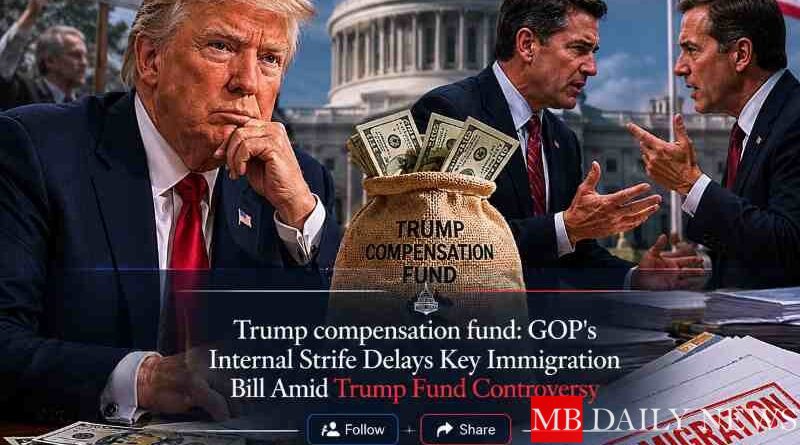
Trump compensation fund: GOP’s Internal Strife Delays Key Immigration Bill Amid Trump Fund Controversy
MB DAILY NEWS | Raleigh, NC.
Trump compensation fund: The Republican Party’s agenda suffered a major setback this week. Internal divisions erupted over a proposed $0.8 billion compensation fund tied to the Trump administration. As a result, congressional leaders postponed key votes on a reconciliation package designed to strengthen immigration enforcement. The delay exposed growing tensions within the party as lawmakers debated the impact of the controversial proposal.
In a recent investigative report by MB Daily News, I examined the rising tensions inside the GOP. Several senators criticized the proposed fund and described it as a “payout pot for punks.” Because of this backlash, many Republican lawmakers reconsidered their support for the broader immigration enforcement package, which had originally been expected to pass quickly.
Trump Compensation Fund: Internal Divisions Emerge
Senate Republicans were preparing to vote on a $72 billion funding package for Immigration and Customs Enforcement and Customs and Border Protection. However, opposition quickly emerged within the party. Several GOP senators voiced frustration with the Trump administration’s plan. In addition, some lawmakers signaled support for Democratic amendments designed to block the fund.
This growing resistance delayed the planned vote. Originally, the vote was expected to help finalize the reconciliation bill before the Memorial Day recess. Instead, lawmakers left Washington earlier than expected, highlighting the fragile unity inside the Republican Party.
“We will pick up where we left off,” Senate Majority Leader John Thune said while acknowledging the complications created by the anti-weaponization fund. His remarks reflected the broader struggle facing Republicans as party leaders attempt to unite members behind a single agenda.
Impact on the Legislative Agenda
The decision to postpone the vote raises new concerns about the GOP’s ability to govern effectively during a period of increasing internal conflict.
At the same time, the disagreement over the compensation fund reveals deeper ideological divisions within the party. These tensions could slow progress on several legislative priorities, especially immigration policy.
Political analysts believe the conflict may create long-term consequences for the Republican Party. In particular, it could affect both future immigration debates and upcoming election strategies. Furthermore, recent political coverage suggests similar disagreements are emerging across multiple areas of the GOP agenda.
“In my view, this development matters not only for the immediate political moment, but also for the wider political debate it could intensify.”
“The divisions within the GOP are becoming increasingly visible, and this situation highlights the challenges of maintaining a united front.”
Broader Implications for Immigration Policy
Although the immediate focus remains on the reconciliation bill, the dispute over the Trump compensation fund also raises larger questions about the future of immigration policy within the Republican Party.
The GOP base remains divided over immigration enforcement priorities. Because of this, lawmakers may struggle to build support for broader reforms that address the complexity of the immigration system.
Political Fallout and Public Perception
The political consequences of this internal conflict could extend beyond Capitol Hill. Public opinion of the GOP may depend on how party leaders manage these disagreements in the coming weeks.
If Republicans fail to present a clear and unified immigration strategy, they could risk losing support among important voter groups ahead of future elections.
Looking Ahead: What Comes Next?
As the GOP moves through this turbulent period, the future of the immigration reconciliation bill remains uncertain. Lawmakers must now address concerns surrounding the Trump compensation fund while also finding common ground within the party.
The next few weeks will likely prove critical. Republican leaders will attempt to restore momentum to their legislative agenda and maintain support among voters before the political divisions deepen further.
Copyright © 2026 MB Daily News. All Rights Reserved.