
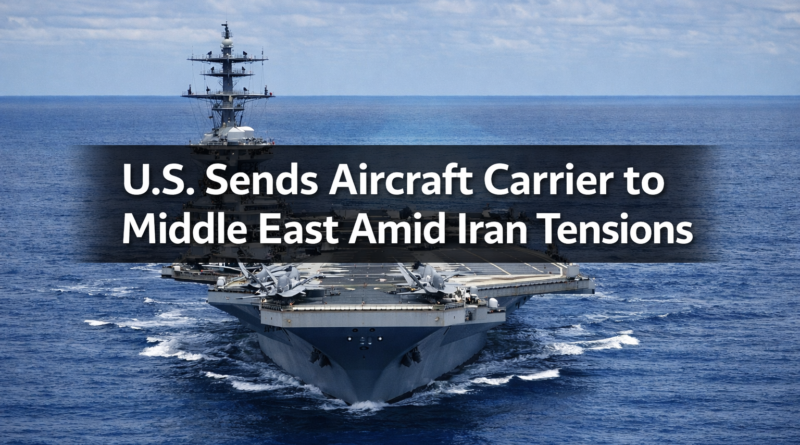
The Pentagon is sending the Navy’s largest and most advanced aircraft carrier to the Middle East, as the U.S. steps up plans for a potential attack on Iran, two U.S. officials said
February 13, 2026 | MB Daily News | Los Angeles CA
U.S. Sends Navy’s Largest Aircraft Carrier to Middle East Amid Rising Iran Tensions
Meta description: The Pentagon is deploying the Navy’s largest and most advanced aircraft carrier to the Middle East as U.S. officials prepare for potential military action involving Iran. Here’s what it means.
The Pentagon is sending the Navy’s largest and most advanced aircraft carrier to the Middle East, escalating America’s military posture in a region already strained by tensions with Iran, according to two U.S. officials familiar with the move.
The deployment signals a significant shift in U.S. force positioning and reflects growing concerns within Washington about potential military confrontation with Tehran.
Why the U.S. Is Sending an Aircraft Carrier to the Middle East
The decision to deploy the Navy’s most powerful aircraft carrier comes amid heightened regional instability and increased military planning inside the Pentagon.
Aircraft carriers serve as floating air bases capable of launching sustained operations without relying on host-country facilities. By moving such a vessel into the Middle East, the United States gains:
- Rapid-response strike capability
- Enhanced air superiority operations
- Expanded missile defense coordination
- Stronger deterrence messaging to Iran and other regional actors
U.S. defense officials have framed the deployment as precautionary, though its scale suggests preparation for potential escalation rather than a routine patrol.
What Makes This Aircraft Carrier Deployment Significant
The carrier being sent is described as the Navy’s largest and most advanced platform. Modern U.S. supercarriers typically:
- Displace more than 100,000 tons
- Carry roughly 70–90 aircraft
- Operate advanced radar and air-defense systems
- Support thousands of sailors and aviation personnel
These ships are central to U.S. power projection. Their presence can quickly shift regional security calculations—especially during fast-moving crises.
Sponsored
Get the latest global markets and breaking geopolitical updates—fast, clear, and mobile-friendly.
Rising U.S.-Iran Tensions: What’s Driving the Shift
Tensions between Washington and Tehran have intensified as regional conflicts and maritime security concerns continue to flare. Officials and analysts often point to overlapping flashpoints, including:
- Escalation risks tied to regional proxy conflicts
- Maritime incidents and shipping security concerns
- Disputes involving Iran’s nuclear program
- Attacks linked to militia groups aligned with Tehran
While neither side has announced intentions for open war, major force movements can indicate that planning for multiple scenarios is underway.
Potential Impact on the Middle East and Global Markets
A U.S. aircraft carrier in the Middle East can influence the region—and the global economy—in several ways:
1) Increased Military Presence
Carrier deployments often include destroyers, cruisers, submarines, and support ships, expanding the overall U.S. naval footprint and operational flexibility.
2) Oil Market Sensitivity
Energy markets can react rapidly to geopolitical risk involving Iran, especially because of the strategic importance of the Strait of Hormuz.
3) Diplomatic Pressure on Regional Allies
Countries hosting U.S. assets may face renewed diplomatic pressure to clarify their positions, particularly if tensions escalate further.
Is a U.S. Attack on Iran Imminent?
U.S. officials have not confirmed that any decision has been made to launch military action. However, contingency planning often includes repositioning forces in advance to protect personnel and preserve response options.
Security analysts caution that deployments do not automatically mean strikes are imminent. Such moves may also serve to:
- Deter further escalation
- Strengthen force protection for troops already in the region
- Improve readiness and response time
- Support intelligence, surveillance, and reconnaissance operations
What to Watch Next
The next several days will be closely watched for signs of escalation or de-escalation. Key indicators include:
- Additional U.S. troop, air, or naval asset movements
- Public statements from Iranian leadership
- Emergency sessions or diplomatic initiatives at the United Nations
- Oil price volatility and shipping advisories
Conclusion
The Pentagon’s decision to send the Navy’s largest and most advanced aircraft carrier to the Middle East is a major signal amid rising U.S.-Iran tensions. While described as precautionary, the move underscores the seriousness of the current geopolitical climate.
Whether this deployment helps deter conflict or sets the stage for confrontation will depend on diplomatic moves and actions on the ground in the coming days.