

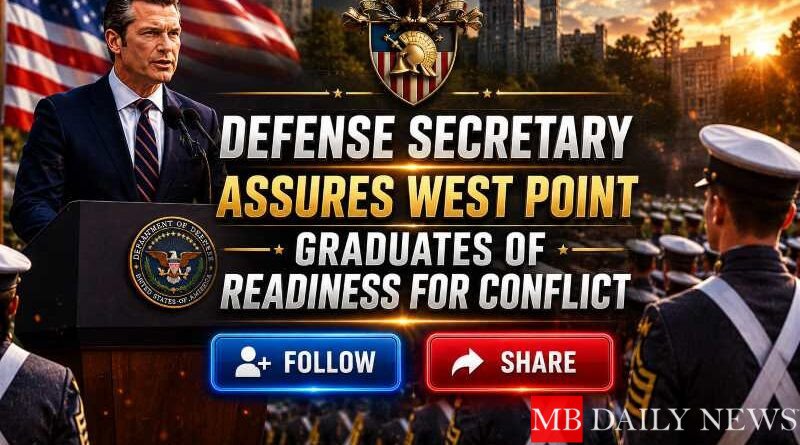
Defense Secretary Assures West Point Graduates of Readiness for Conflict
MB DAILY NEWS | Raleigh, NC.
West Point graduates readiness for conflict: In a significant address at the U.S. Military Academy at West Point, Defense Secretary Pete Hegseth conveyed a powerful message to graduating cadets: they are prepared for the challenges of war. This declaration comes at a time of heightened tensions between the United States and Iran, as the possibility of military action looms large, underscoring the urgent stakes facing these future leaders.
In a recent investigative report by MB Daily News, I took a closer look at the implications of Hegseth’s remarks, particularly as they relate to the ongoing geopolitical landscape. The speech, delivered during his inaugural visit to West Point, did not shy away from the realities of military readiness, even as it skirted direct references to the contentious U.S. involvement in Iran.
West Point graduates readiness for conflict: Addressing the Stakes
Hegseth’s remarks resonated with the graduates, emphasizing the critical nature of their impending roles. “We’re sending you to lead, we’re sending you to forge warriors, and we are sending you, perhaps, to war, and you are ready,” he stated, framing their graduation as a pivotal moment in their military careers. His comments reflect a broader narrative within the military establishment regarding the importance of preparing for potential conflicts.
As a result, This rhetoric comes amid a backdrop of political maneuvering, as President Trump adjusts his Memorial Day weekend plans to remain in Washington, D.C., signaling the administration’s focus on the escalating situation with Iran. The president’s decision to prioritize national security over holiday observance speaks volumes about the perceived urgency of the matter.
“The stakes could not be higher,” Hegseth noted, emphasizing the gravity of the moment for these young leaders. In that sense, the story also echoes similar developments that have surfaced around the same issue in recent coverage, adding a wider frame to the immediate headline.
Controversy Surrounding Military Diversity Initiatives
While Hegseth’s address focused heavily on military readiness, it also included pointed criticisms of diversity initiatives within the armed forces. His comments reflect a growing divide within military circles regarding the role of diversity in shaping the future of the U.S. military. Critics argue that such efforts are essential for fostering an inclusive environment, while supporters of Hegseth’s stance contend that they may detract from operational effectiveness.
“In my view, this development matters not only for the immediate political moment, but for the wider conversation it may intensify.”
Political Implications of Military Readiness
The backdrop of Hegseth’s speech is not merely academic; it has real-world implications for U.S. military policy. As the administration grapples with the complexities of foreign relations, particularly with Iran, the readiness of military personnel becomes a focal point in discussions about potential military action. The president’s recent statements, indicating a 50-50 chance of reaching a diplomatic resolution or escalating military engagement, further illustrate the precarious balance of power at play.
“Either we reach a good deal or I’ll blow them to a thousand hells,” Trump remarked in a phone call, highlighting the administration’s tough stance.
Wider Context of U.S.-Iran Relations
The tension between the U.S. and Iran has been a persistent theme in American foreign policy, with recent developments suggesting that the situation could escalate. The administration’s approach, characterized by both diplomatic overtures and military threats, reflects a dual strategy aimed at deterring aggression while maintaining the option for military intervention. As Hegseth’s address underscores, the military is poised to play a crucial role in whatever course is charted.
Impact on Military Families and Communities
The implications of Hegseth’s remarks extend beyond the confines of West Point. Military families and communities across the nation are watching closely, as the prospect of conflict can instill both pride and anxiety. Graduates stepping into leadership roles carry not only the weight of their responsibilities but also the hopes and fears of those who support them.
Looking Ahead: What Comes Next?
As the political landscape evolves, the readiness of U.S. military personnel will remain a focal point in national discourse. Hegseth’s assurances to the West Point graduates reflect a commitment to preparing for potential conflicts, but they also highlight the broader uncertainties facing the military establishment. The administration’s next moves regarding Iran will likely shape not just foreign policy but also the future of military engagement, with implications that could reverberate across the globe.