
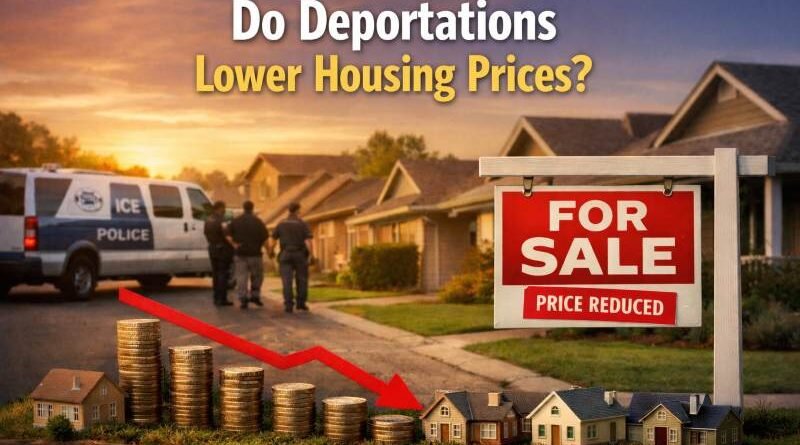
Do Increased Deportations Lead to Reduced Housing Prices?
MB DAILY NEWS | Raleigh, NC
Reduced housing prices: Recent discussions have emerged regarding the impact of increased deportations on housing prices. Some officials claim that stricter immigration policies are leading to a decline in housing costs. However, many economists argue that other factors play a more significant role in influencing the housing market. Understanding these dynamics is crucial for stakeholders in real estate and policy-making. The interplay between immigration and housing prices remains a complex issue. Observers should monitor how these policies evolve and their broader implications.
Immigration Policies and Housing Market Dynamics
Immigration policies can significantly influence various sectors, including real estate. Proponents of stricter immigration enforcement argue that fewer residents can lead to lower demand for housing. This perspective suggests that deportations might ease pressure on housing prices. However, the reality is often more nuanced, as housing markets are affected by numerous variables. Factors such as local economic conditions and housing supply also play critical roles. Stakeholders must consider these elements when evaluating the housing market’s future.
Economic Factors Influencing Housing Prices
Economists emphasize that housing prices are primarily driven by supply and demand dynamics. An oversupply of homes can lead to decreased prices, regardless of immigration levels. In many regions, housing inventory has increased, contributing to price reductions. Additionally, interest rates and employment rates significantly impact buyers’ purchasing power. As these economic indicators fluctuate, they can overshadow the effects of immigration policies. Observers should keep an eye on these economic trends as they unfold.
Regional Variations in Housing Markets
The impact of deportations on housing prices may vary significantly across different regions. Urban areas with high immigrant populations might experience different effects compared to rural locales. In cities where demand remains strong, housing prices may not decline as expected. Conversely, areas with an oversupply of housing could see more pronounced price drops. Understanding these regional differences is essential for investors and policymakers alike. Future housing market analyses should consider these geographic nuances.
Long-Term Implications for Real Estate
Long-term trends in the housing market will likely reflect a combination of factors, including immigration policies. While immediate effects may be observable, the lasting impact remains uncertain. Investors should remain cautious and consider how policy changes could reshape market dynamics. The interplay between immigration and housing prices will continue to evolve, influenced by broader economic conditions. Keeping abreast of these developments will be vital for making informed decisions. The future of real estate may hinge on how these factors interact over time.
Public Sentiment and Housing Affordability
Public opinion on immigration and housing affordability often intersects, influencing policy decisions. Many citizens express concerns about rising housing costs, linking them to immigration levels. This sentiment can drive political agendas and shape future immigration policies. Understanding public perception is crucial for real estate professionals navigating this landscape. As debates continue, the relationship between immigration and housing affordability will remain a focal point. Stakeholders should engage with community sentiments to better anticipate market shifts.
Monitoring Future Developments
As the housing market continues to evolve, monitoring future developments will be essential. Changes in immigration policy can have ripple effects across various sectors, including real estate. Analysts will need to assess how these policies interact with economic indicators and housing supply. Keeping track of these trends will provide valuable insights for investors and policymakers. The ongoing dialogue surrounding immigration and housing will likely shape market conditions for years to come. Staying informed will be key to navigating this complex landscape.