
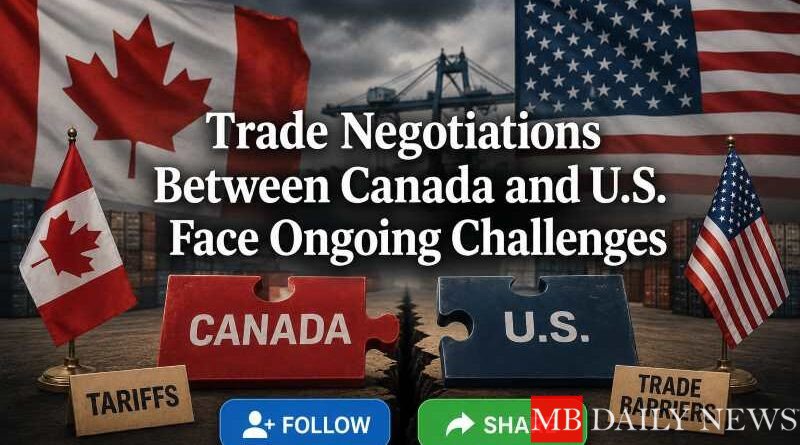
Trade Negotiations Between Canada and U.S. Face Ongoing Challenges
MB DAILY NEWS | Raleigh, NC.
Canada and U.S. trade negotiations: Canada and the United States continue to experience significant challenges in their trade negotiations. As the deadline for reviewing the Canada-U.S.-Mexico Agreement approaches, tensions remain high. Former chief trade negotiator Steve Verheul highlighted the stark differences between the two nations during a recent summit. Both countries seek concessions from each other on sensitive issues, complicating the negotiation process. With limited room for compromise, the upcoming July deadline may pass without substantial progress. Stakeholders are closely monitoring these developments, as they could impact broader economic relations.
Current State of Negotiations
Negotiations between Canada and the U.S. have reached a stalemate, according to Verheul. He emphasized that both nations are far apart on key issues, which hinders progress. The U.S. seeks concessions from Canada, while Canada expects movement on significant topics from the U.S. This impasse raises concerns about the future of trade relations. As the July deadline approaches, many observers question whether any breakthroughs will occur. The lack of progress could have implications for businesses and consumers in both countries.
Implications of Domestic Politics
Domestic political dynamics in the U.S. play a crucial role in shaping trade negotiations. Verheul noted that the U.S. is more likely to engage in discussions due to its internal political landscape. Canada cannot compel the U.S. to reach a resolution or make concessions. This reality underscores the complexity of international trade negotiations. Stakeholders must remain vigilant as shifts in U.S. politics could influence the timeline and outcomes of discussions. The interplay between domestic and international factors will be critical to watch in the coming months.
Potential for a Grand Bargain
Last fall, reports suggested that Canada and the U.S. were close to reaching a significant agreement. However, those negotiations ultimately fell apart at a critical moment. Verheul’s insights indicate that the potential for a grand bargain remains uncertain. Both nations must find common ground to move forward effectively. The failure to secure an agreement last year raises questions about future negotiations. Observers are keen to see if any new proposals emerge that could bridge the existing gaps.
Mexico’s Role in Trade Discussions
Mexico’s position in the trade negotiations also influences the dynamics between Canada and the U.S. Verheul expressed that Mexico has not made significant strides in its discussions with the U.S. This stagnation could impact the overall trade landscape in North America. A united front among the three countries may be necessary to revitalize trade talks. The desire to protect North America as a cohesive trade zone remains a priority for all parties involved. Future negotiations may hinge on collaborative efforts among the three nations.
Looking Ahead: What to Expect
As the July deadline approaches, stakeholders should prepare for potential outcomes. The likelihood of a major announcement seems low, given the current state of negotiations. Businesses and policymakers must consider how these developments could affect trade practices. The ongoing tensions may lead to prolonged uncertainty in trade relations. Observers will be watching for any signs of movement in negotiations. The next few months will be critical in determining the future of Canada-U.S. trade relations.
Conclusion: The Path Forward
Trade negotiations between Canada and the U.S. face significant hurdles as both nations seek concessions. The complexities of domestic politics and previous negotiation failures contribute to the current stalemate. Stakeholders must remain engaged and informed as developments unfold. The potential for a united North American trade zone exists, but achieving that goal requires collaboration. Future discussions will likely shape the economic landscape for years to come. The path forward remains uncertain, but the importance of these negotiations cannot be overstated.