
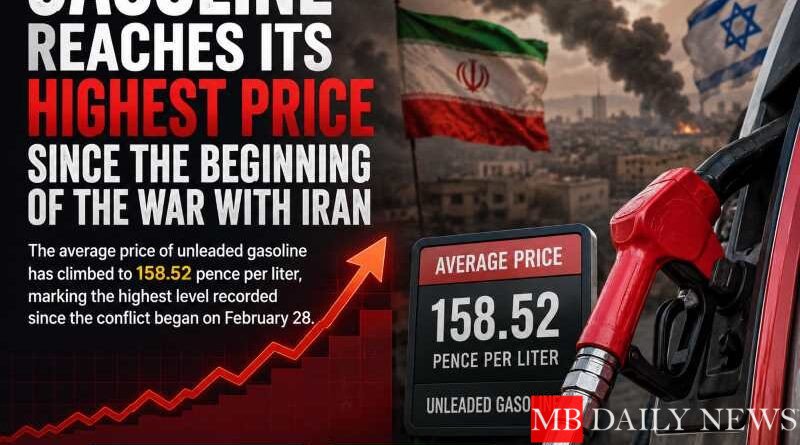
Gasoline Reaches Its Highest Price Since the Beginning of the War With Iran
MB DAILY NEWS | Raleigh, NC.
Gasoline prices have reached their highest point in months as tensions in the Middle East continue to grow. According to the RAC, the average price of unleaded gasoline climbed to 158.52 pence per liter. This is the highest level recorded since the war with Iran began on February 28.
The conflict has shaken global energy markets. Oil production and transportation in the Middle East have slowed down due to missile and drone attacks. Some companies even stopped operations on key routes.
“We are seeing a direct effect of the conflict on fuel prices,” an RAC spokesperson said. “When oil supply routes face threats, markets react quickly, and drivers end up paying more.”
Global Markets Under Pressure
Energy experts say fears of a larger regional conflict have increased uncertainty in global markets. Investors remain worried about possible disruptions in oil exports.
The Strait of Hormuz, one of the world’s most important oil shipping routes, remains under close watch. Any disruption in that area could push fuel prices even higher.
Economist Laura Bennett explained the situation clearly. “The biggest concern is uncertainty,” she said. “As long as the conflict continues, markets will remain unstable.”
Drivers Feel the Impact
Many drivers say the rising fuel costs are becoming difficult to manage. British driver James Turner shared his frustration.
“Filling up my car has become expensive,” Turner said. “A few weeks ago, prices were lower. Now every trip costs much more.”
Transportation companies also face growing pressure. Higher fuel costs often increase the price of goods and services. Analysts warn that inflation could rise further if oil prices continue climbing.
Diesel Prices Also Increase
Diesel prices have followed the same trend. Energy companies report delays in fuel deliveries and operational problems across several trade routes in the region.
Meanwhile, European governments are discussing measures to reduce the financial burden on consumers. Some political leaders support temporary fuel tax cuts. However, experts believe those actions may offer only limited relief if the conflict continues.
For now, millions of people continue paying higher prices at gas stations while uncertainty spreads across the global economy.