

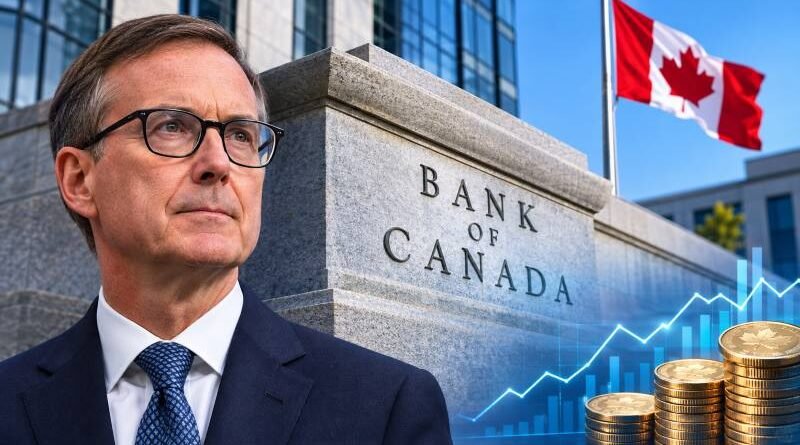
Canada Begins Search for Next Central Bank Governor as Tiff Macklem Announces Departure
The Bank of Canada is preparing for a leadership transition as Governor Tiff Macklem confirms he will not seek a second term. Jean Boivin, Carolyn Rogers, and Carolyn Wilkins are among the potential successors as the country faces inflationary pressures, trade uncertainty, and economic challenges.

The Bank of Canada has officially launched the process of selecting its next governor after Tiff Macklem announced on Monday that he will not seek a second term leading the institution. His seven-year mandate will conclude on June 2, 2027, bringing an end to a tenure shaped by the COVID-19 pandemic, historically high inflation, and growing trade tensions with the United States.
The leadership transition represents one of the most consequential economic decisions facing Prime Minister Mark Carney’s government. The next central bank governor will be responsible for guiding monetary policy through an increasingly complex environment characterized by international trade disruptions, financial uncertainty, and renewed pressure on consumer prices.
Among the potential candidates attracting attention is Jean Boivin, currently head of the BlackRock Investment Institute and a former deputy governor of the Bank of Canada. His experience in financial markets, public administration, and monetary policy places him among the leading contenders identified by economists and financial analysts.
Tiff Macklem Announces Departure After Seven Years Leading the Bank of Canada
Macklem’s decision marks the approaching conclusion of a period characterized by extraordinary economic developments. He became governor in 2020 as Canada confronted the initial consequences of the COVID-19 pandemic. During his leadership, the central bank implemented exceptional measures to stabilize financial markets before adopting restrictive monetary policies to combat rising inflation. Macklem described leading the institution as one of the greatest privileges of his professional career. Furthermore, he emphasized his commitment to fulfilling his responsibilities until the conclusion of his mandate. His scheduled departure in June 2027 will allow the institution to organize an orderly leadership transition without disrupting monetary policy decisions or financial operations. The announcement also provides sufficient time to evaluate candidates capable of navigating Canada’s evolving economic environment.
Jean Boivin Emerges as a Leading Candidate for Central Bank Governor
Jean Boivin has emerged as one of the most frequently mentioned potential successors to Macklem. He currently leads the BlackRock Investment Institute, an organization specializing in global economic research and financial market analysis. Previously, Boivin served as deputy governor of the Bank of Canada during Mark Carney’s leadership and later held a senior position within Canada’s Department of Finance. His combination of institutional experience and private-sector expertise could strengthen his candidacy. Additionally, his professional background provides extensive familiarity with monetary policy decisions, financial stability, and international economic developments. However, no official appointment has been announced, and the selection process remains open to other qualified professionals. Ultimately, the decision will depend on an assessment of leadership capabilities, economic expertise, and the ability to preserve the central bank’s institutional independence.
Carolyn Rogers and Carolyn Wilkins Among Potential Successors
The list of possible candidates also includes two prominent economists with extensive experience in Canada’s financial system. Carolyn Rogers, the Bank of Canada’s current senior deputy governor, has developed considerable expertise in banking supervision, financial regulation, and international economic policy. Meanwhile, Carolyn Wilkins previously held the same position and participated in important monetary policy decisions during Canada’s response to the pandemic. Both candidates possess substantial knowledge of financial stability and central banking operations. Furthermore, either appointment would represent a historic milestone, as Canada has never had a woman serve as governor of its central bank. Nevertheless, the final decision will depend on the evaluation conducted by the selection committee and the required government approvals. Their experience makes them noteworthy contenders in what is expected to be a closely watched appointment process.
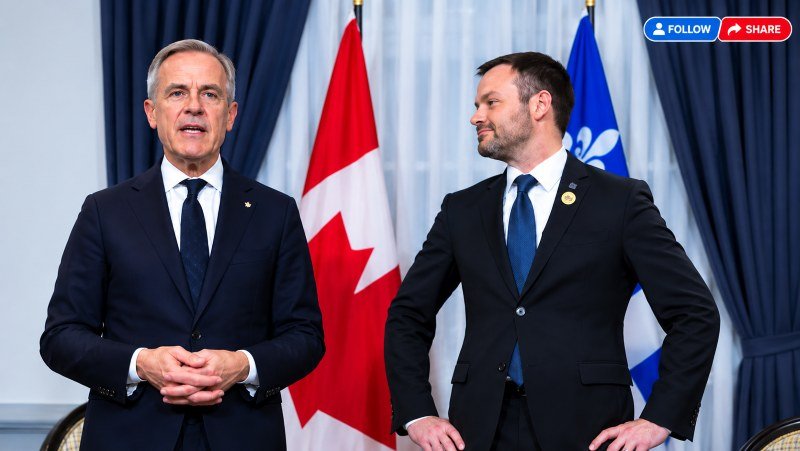
Bank of Canada Governor Succession
Canada prepares to appoint a new central bank governor as Tiff Macklem’s mandate approaches its conclusion….
Mark Carney’s Government Will Play a Key Role in the Transition
The appointment of Canada’s next central bank governor will carry particular significance for Prime Minister Mark Carney, who previously led both the Bank of Canada and the Bank of England. Although the institution’s independent directors formally oversee the selection process, the appointment requires approval from the federal finance minister and cabinet. To manage the search, the Bank of Canada has established a selection committee supported by the international executive recruitment firm Egon Zehnder. The institution expects to complete its assessment of candidates during the spring of 2027. The incoming governor is scheduled to begin a seven-year mandate on June 3, 2027. This structured process is designed to ensure an orderly transition while preserving the central bank’s independence and credibility. Consequently, the selection will attract significant attention from financial markets, policymakers, and the business community.
Inflation and Interest Rates Will Shape the Next Governor’s Agenda
Canada’s next central bank governor will inherit an economy still confronting inflationary pressures and challenges to sustained growth. During Macklem’s administration, the Bank of Canada raised its benchmark interest rate from 0.25% to 5% to combat inflation following the pandemic, which peaked at 8.1% in 2022. The institution subsequently reduced borrowing costs to support economic activity. However, it increased interest rates again in October 2026 amid renewed inflationary concerns linked to energy prices. Annual inflation stood at 3.1% in October, remaining above the central bank’s official 2% target. Consequently, the next governor will need to balance price stability with the importance of supporting investment, employment, and consumer spending. Achieving this balance without undermining financial stability will be among the most significant challenges facing the institution.
U.S. Trade Tensions Complicate Canada’s Economic Outlook
Canada’s commercial relationship with the United States represents another major challenge for the incoming central bank leadership. American tariffs have created uncertainty among exporters, manufacturers, and investors, while several industries face higher production costs and difficulties planning future expansion. During his tenure, Macklem warned that prolonged trade restrictions could produce structural changes in the Canadian economy, affecting both supply and demand. These circumstances require carefully calibrated monetary policy because interest rate adjustments cannot directly eliminate trade barriers. Furthermore, disruptions to international supply chains can contribute to higher prices while simultaneously weakening economic activity. Consequently, the next governor will need to assess how international trade policies influence inflation, employment, productivity, and investment. The ability to distinguish temporary economic disruptions from longer-term structural changes will be essential.
Canadian Housing Market and Borrowers Will Closely Monitor the Appointment
The selection of a new governor will also have implications for Canada’s real estate market and financing conditions. Central bank interest rate decisions influence mortgage borrowing costs, business loans, and other forms of credit. Over recent years, higher interest rates have contributed to moderating housing market activity following a period of substantial property price increases. As a result, homebuyers, homeowners, and real estate investors will closely monitor signals regarding monetary stability and economic expectations. However, the identity of the next governor will not independently determine the direction of interest rates. Monetary policy decisions must respond to economic indicators and the central bank’s established mandate. Nevertheless, the incoming governor’s communication strategy and assessment of economic risks could influence market expectations and borrowing decisions. Financial institutions and property market participants will therefore pay close attention to the leadership transition.
International Experience and Monetary Independence Will Be Essential
The selection process must identify a professional capable of managing an institution with increasingly complex responsibilities. Beyond directing interest rate decisions, the governor oversees important aspects of financial stability and participates in international discussions concerning economic risks. Technological transformation, particularly developments in artificial intelligence and payment systems, introduces additional challenges. Other professionals mentioned in media discussions include Nicolas Vincent, Jean-François Perrault, and Paul Beaudry, each possessing experience in economic research, financial institutions, or monetary policy. However, none has been confirmed as Macklem’s successor. The evaluation process will need to consider economic expertise, leadership experience, independence of judgment, and an understanding of both domestic and international financial developments. Maintaining public confidence in the institution will remain a central consideration.
Canada Prepares for a New Era in Monetary Policy
Tiff Macklem’s announced departure opens a transition period that could influence Canada’s economic expectations for years to come. His successor will assume responsibility for maintaining confidence in the central bank while navigating inflation, international trade uncertainty, and financial market transformation. Although Jean Boivin has emerged as a prominent potential candidate, the selection process remains open and is expected to conclude before June 2027. The central priority will be appointing a leader capable of protecting the Bank of Canada’s independence, maintaining price stability, and responding effectively to an increasingly complex global economic environment. For businesses, households, and investors, the appointment will represent an important signal regarding monetary policy continuity and the country’s future economic direction.
