

Judge Bars Brooke Rollins’ Religious Emails to USDA Employees
A federal judge in San Francisco has ruled that Agriculture Secretary Brooke Rollins likely violated the First Amendment by sending Christian-themed holiday messages from her official account to the U.S. Department of Agriculture’s roughly 100,000 employees. The order, issued Thursday, November 19, in the dispute over the Brooke Rollins religious emails, blocks further messages of the kind challenged and requires her to follow the department’s own workplace rules on religious expression, a decision with implications for how Cabinet officials communicate faith to the federal workforce.
What the judge decided on the Brooke Rollins religious emails
U.S. District Judge Trina L. Thompson of the Northern District of California granted a preliminary injunction on the plaintiffs’ Establishment Clause claim in National Federation of Federal Employees v. U.S. Department of Agriculture (No. 26-cv-04406), according to the court’s written order. The suit was brought in May by six USDA employees and the National Federation of Federal Employees, a union that represents about 19,000 USDA workers.
The judge singled out two messages. “The April 5, 2026, and December 23, 2025, messages go too far,” she wrote. AP reporting carried by WMTW said Rollins sent Christian messages and images on holidays including Independence Day, Thanksgiving, Christmas and Easter, but not on holidays of other faiths, and that the April 5 Easter message referred to “our risen Lord in the Upper Room almost two thousand years ago.”
Thompson pointed to three factors that, in her view, made the emails coercive rather than personal expression:
- Authority: the messages came from the head of the department.
- Channel: they went out through official email to the entire workforce, which employees are expected to read, with no opt-out.
- Language: the use of “we,” “us” and “our” signaled an assumption that all recipients shared the secretary’s faith.
The judge also dismissed the plaintiffs’ separate claims under the Administrative Procedure Act, finding the emails were not final agency action.
Rollins held to her own department’s policy
Rather than writing new limits, the order applies USDA Memorandum 1078-019, a workplace religious-expression policy adopted under Rollins. Under it, she must stop if a colleague asks her to, “cannot create a hostile work environment through persistent unwelcome advances,” and “cannot use official authority to pressure subordinates.” She remains free to discuss her beliefs with interested colleagues, explain why her faith matters to her, politely invite coworkers to religious events and share religious views in appropriate conversations.
“The Court does not purport to regulate the religiosity of the Secretary—nor could it,” Thompson wrote. “Instead, this Court requires the Secretary to observe her own directives.” The order states that it does not address Rollins’ conduct in her personal capacity.
USDA weighs an appeal
A USDA spokesperson called the ruling “a completely unprecedented attempt to muzzle a Cabinet Secretary,” according to the AP report published by WMTW, and said the department is considering an appeal. No appeal had been filed as of that report. The Washington Post also reported the decision on November 20.
The case continues in district court. The parties must file a joint case management statement by December 10, and a case management conference is scheduled for December 17 by videoconference.
What it means for federal workers
Because it is a preliminary injunction, the ruling is not a final judgment, but it gives an early signal of how courts may weigh mass religious messaging by senior officials. For USDA’s workforce, the immediate effect is that department-wide emails of the type challenged must stop while the case proceeds. For other agencies, the decision underscores a distinction drawn throughout the order: officials may express personal faith, but using official channels that employees cannot ignore to promote one religion invites constitutional scrutiny. An appeal would go to the U.S. Court of Appeals for the Ninth Circuit.
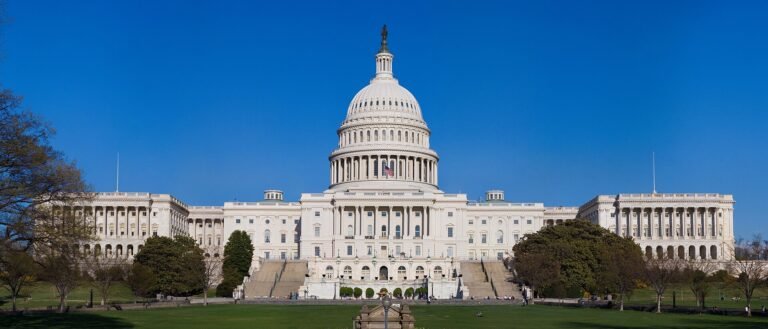
Featured image: Laszlo Magyar / Pexels (Pexels License).