

Senate Permitting Reform Bill: What It Means for Energy Costs
The Senate’s 62-33 passage of a sweeping permitting reform bill late on November 19 could change how quickly power lines, power plants, pipelines and data centers get built across the United States, and who pays for the grid upgrades they need. The Bipartisan American Affordability and Jobs Act of 2026 now goes to a House that has only the post-Thanksgiving lame-duck session to act before the 119th Congress ends on January 3, 2027. Here is what the measure would do and who would feel the effects.
What the permitting reform bill changes
The legislation, introduced September 30 as S. 5653 by Sens. Shelley Moore Capito (R-W.Va.), Mike Lee (R-Utah), Martin Heinrich (D-N.M.) and Sheldon Whitehouse (D-R.I.), amends the National Environmental Policy Act, the Clean Water Act, the National Historic Preservation Act, the Endangered Species Act and the Federal Power Act. According to a provision-by-provision summary by Engineering News-Record, the passed version would:
- Require many lawsuits challenging environmental reviews to be filed within 150 days of a project’s authorization.
- Have courts generally send flawed approvals back to agencies for repair, with up to 180 days to fix them, instead of voiding permits or halting construction.
- Restrict agencies from revoking or materially altering permits already issued, with exceptions for fraud, material violations, court orders and specified health, safety or environmental threats.
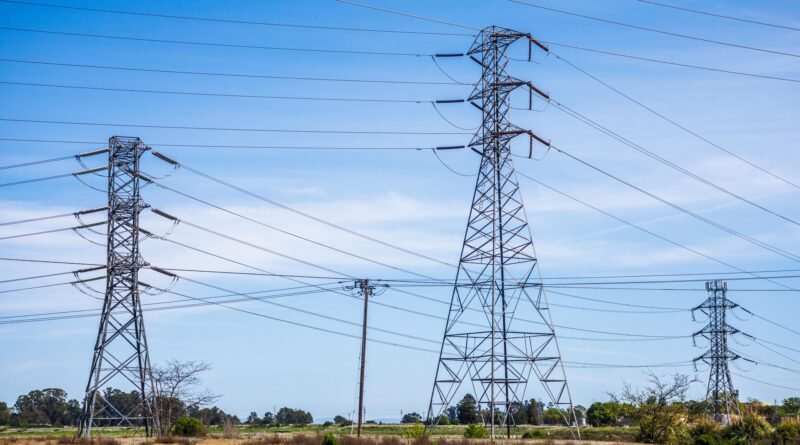
- Expand the Federal Energy Regulatory Commission’s authority over qualifying interstate transmission lines rated 230 kilovolts or more.
- Extend certain federal water permits from five to 10 years and set new deadlines for state water-quality certifications.
The bill largely keeps existing one-year and two-year deadlines for environmental assessments and impact statements, adding new clocks for the decisions that follow.
What it could mean for electricity bills
Supporters frame the measure as a cost-of-living bill. “Tonight, the passage of permitting reform in the Senate finally became reality,” Capito said after the vote. Lee called it “a historic victory and a big step toward making life more affordable,” as quoted by ENR.
The household savings are projected rather than guaranteed. Energy News Beat reported that there is no Congressional Budget Office estimate of the bill’s effect on residential bills, and that Rhodium Group modeling of the version introduced in September projects average household electricity bills $50 to $78 lower in 2040 than they would otherwise be, with most savings arriving more than a decade from now.
The bill also addresses data centers, whose rising power demand has become a political flashpoint. A provision directs that they “bear the full cost of any electric service that they require” so costs are not shifted to other customers. A managers’ package that sponsors said would close a related loophole never received a vote, so the House will receive the bill without that fix.
Who opposes it and why
Fifteen Democrats and independents voted yes, but critics within the party argued the bill trades away environmental safeguards and public participation. Sen. Edward Markey (D-Mass.) opposed it, and Sen. Catherine Cortez Masto (D-Nev.) cited tribal objections, saying “there is no reason to threaten Tribal sovereignty to accomplish these goals.” California Attorney General Rob Bonta led 17 state attorneys general in asking Senate leaders to delay the vote, ENR reported. The National Congress of American Indians has urged lawmakers to “reject BAAJA in its entirety.”
Backers include the Associated General Contractors of America, the American Council of Engineering Companies and more than 300 solar and energy storage companies, illustrating the unusual coalition of fossil fuel and renewable interests behind the measure.
What happens next in the House
The House passed its own permitting bill, the SPEED Act, 221-196 in December 2025, and the two versions differ. The House must pass the Senate text, or the chambers must reconcile their bills, before the president can sign it; CBS News reported that President Trump has expressed support for the deal. Some Democrats, such as Rep. Scott Peters (D-Calif.), want it done now: “We should pass it before the end of this Congress.” Others, including Rep. Jared Huffman (D-Calif.), argue “We can produce a better deal.”
That choice carries extra weight because Democrats won the House majority in the midterms and take control in January, when any unfinished bill must start over. For a look at the incoming majority’s broader economic priorities, see what Democrats plan for the U.S. economy in 2027.
Featured image: Robert So / Pexels (Pexels License).