
Ayodhya Janakpur Train Launched as India, Nepal Sign Eight MoUs
A weekly Ayodhya Janakpur train linking two of the most important sites in the Ramayana tradition was flagged off on Monday as India and Nepal signed eight agreements during Nepal Prime Minister Balendra Shah’s state visit to New Delhi. Prime Minister Narendra Modi also announced a development cooperation package of 24,000 crore Nepali rupees to help Nepal rebuild after the severe floods of August, according to ANI. The new rail service, named the Saryu-Kamala Express, is expected to make travel easier for pilgrims, tourists and families on both sides of the open border, particularly in Uttar Pradesh and Bihar.
Shah, who became prime minister in March 2026, arrived in New Delhi on Sunday on his first state visit to India and was received by Minister of State Jitin Prasada, The Pioneer reported. Talks with Modi were held at Hyderabad House on Monday, followed by a joint press statement, before Shah left for Kathmandu in the afternoon, according to Nepal’s Ministry of Foreign Affairs.
Ayodhya Janakpur train: route and schedule
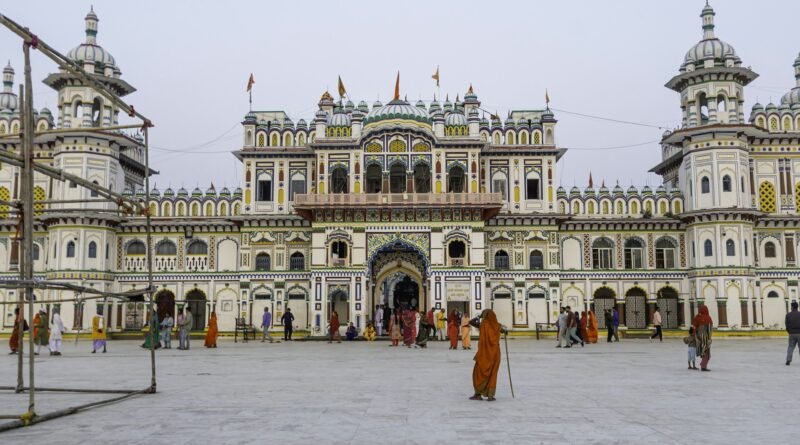
The Saryu-Kamala Express connects Ayodhya Cantt in Uttar Pradesh with Janakpur Dham in Nepal’s Madhesh Province, the traditional birthplace of Sita. The two leaders jointly flagged off the service, ANI reported. Key points reported so far:
- Frequency: one train a week in each direction.
- Distance: about 604 km, according to The Pioneer.
- Route: through Gorakhpur and Basti in Uttar Pradesh and Raxaul and Sitamarhi in Bihar before crossing into Nepal; the published lists of other stops differ between reports and are yet to be confirmed in an official timetable.
- Proposed timing: departures from Ayodhya Cantt on Mondays and from Janakpur on Saturdays, according to the schedule cited by The Pioneer.
The date for regular commercial bookings has not yet been announced. Indian Railways is expected to publish fares and the final timetable separately.
Modi tied the service to the shared religious heritage of the two countries. “Lord Ram and Mother Sita are the symbols of our shared civilisation and faith,” he said, according to ANI. Shah said: “Today, we have inaugurated rail connectivity to make this bond even more vibrant.”
Eight India-Nepal MoUs signed in New Delhi
The agreements exchanged on Monday cover security, health, governance and the rural economy, according to ANI:
- Satellite communications: ISRO and Nepal’s Ministry of Information and Communication, for a network using the South Asia Satellite.
- Forensics: National Forensic Sciences University, Gandhinagar, and the Nepal Police Crime Investigation Department.
- Police training: Rashtriya Raksha University and Nepal’s National Police Academy.
- Civil service training: the National Centre for Good Governance and Nepal’s Administrative Staff College.
- Health and medicine cooperation between the two health ministries.
- Traditional medicine, including Ayurveda.
- Technical cooperation on sustainable urban development.
- Livestock and fisheries development.
A cross-border road bridge linking Uttarakhand with Nepal was also inaugurated, ANI reported.
Flood aid package and what it means for Nepal
The largest financial announcement was the 24,000 crore Nepali rupee package for post-flood reconstruction and longer-term development. “We express our deep condolences for the loss of lives caused by the severe floods in Nepal in August,” Modi said, according to ANI. The details of how the money will be disbursed and which projects it will fund have not yet been made public.
Energy and connectivity were also on the agenda. Ahead of the talks, The Pioneer reported that the leaders were expected to discuss India’s commitment to buy 10,000 MW of electricity from Nepal over the next decade, the proposed Raxaul-Kathmandu railway line and new air routes such as Bhairahawa-Bagdogra. No new agreement on these items was reported after the meeting.
Impact for pilgrims, border districts and trade
For residents of the border belt in eastern Uttar Pradesh and north Bihar, the train adds a direct rail option for work, study, trade and family visits across a frontier where people already move without visas. Religious tourism is the most immediate beneficiary, with the service linking Ayodhya directly to Janakpur’s Janaki Mandir. Shah invited Indians to visit Nepalese sites including Muktinath, Pashupatinath, Janaki and Lumbini.
India is Nepal’s largest trade and transit partner, The Pioneer noted. Shah extended an invitation to Modi to visit Nepal, signalling that more announcements on power trade and rail links could follow.
Featured image: Sushanta Rokka / Unsplash (Unsplash License).