
Parliament Winter Session 2026 Dates Unclear After Record 101-Day Gap
India’s Parliament Winter Session still has no announced dates, even though the sitting traditionally opens in the last week of November. The delay follows a record-long gap after the Monsoon Session, which both Houses adjourned sine die on August 13 but which stayed formally open for more than 100 days. The uncertainty matters because the government is weighing whether to bring back the defeated constitutional amendment on women’s reservation and delimitation, a change that would redraw the Lok Sabha and affect every state’s representation.
Business Standard reported late on Sunday, November 22, that the Monsoon Session had been prorogued that evening, 101 days after adjournment. No schedule for the Winter Session had been published by the government at the time of writing.
A record gap before the Parliament Winter Session
The pause broke the previous record of 87 days, set in 2008, according to Deccan Herald and The Daily Pioneer. ThePrint, which reviewed earlier long pauses, listed other cases including 76 days in 1987 during the Bofors controversy and 54 days in 1989.
The procedure explains why the timing drew attention. A session that has been adjourned but not prorogued can be reconvened with about two days’ notice, while a fresh session normally requires around 14 days’ notice for members, The Hans India and Business Standard reported. Both are conventions rather than constitutional requirements. Under Article 85 of the Constitution, no more than six months may pass between sittings, which means Parliament must meet again before February 13.
Deccan Herald and the news agency IANS have reported that the Winter Session is likely to begin in the first week of December, but no date has been confirmed.
Women’s reservation and delimitation bill in focus
The long gap fuelled speculation that the government wanted the option of a special sitting to pass a new Constitution amendment. An earlier version, introduced in April, was defeated in the Lok Sabha with 298 votes in favour and 230 against, short of the two-thirds of members present and voting needed for a constitutional change, Scroll and Business Standard reported.
The proposal links one-third reservation for women in the Lok Sabha and state assemblies to a delimitation exercise. According to Deccan Herald, it would raise the strength of the Lok Sabha from 543 seats to a maximum of 850 so that the women’s quota could take effect before the 2029 general election. Options under discussion include a 50% increase in seats for every state, with inter-state shares kept on the basis of the 1971 Census. Reports say no final decision has been taken.
PTI, citing sources, reported that the government is confident of winning the vote in the Lok Sabha by a margin of 15 to 18 votes. Business Standard noted that such a margin might still fall short of the two-thirds threshold.
Opposition demands consultation
The Congress has pressed for an all-party meeting before any new bill is tabled. Congress general secretary Jairam Ramesh wrote on X: “Nobody knows what the new Bill will contain since the old Bill was defeated resoundingly on April 17, 2026.” He added: “No new specific proposals have been discussed with any political party in a serious and structured manner.”
Ramesh said four letters from Congress president Mallikarjun Kharge to the Prime Minister seeking such a meeting had gone unanswered. The opposition has set out a four-point formula, as reported by Scroll:
- keep the Lok Sabha at its current strength of 543 seats;
- retain the existing state-wise distribution of seats;
- reserve one-third of seats for women within that total;
- freeze the arrangement for 25 years.
A Congress leader said the DMK and the Nationalist Congress Party (Sharadchandra Pawar) back the formula, Scroll reported. Ramesh has argued that a purely population-based redistribution would be unfavourable to southern states that have brought down population growth. The parliamentary fight comes as the opposition seeks momentum after the Rajasthan panchayat election results, in which Congress beat the BJP.
What happens next
The President must summon Parliament for a new session on the government’s advice, after which the Lok Sabha and Rajya Sabha secretariats publish the calendar and list of business. Key points to watch:
- whether the Winter Session opens in early December as expected;
- whether a revised women’s reservation and delimitation bill is listed, and in what form;
- whether the government calls the all-party meeting the opposition has demanded.
For voters, the outcome will shape how many MPs each state sends to Delhi and how soon women’s reservation in legislatures becomes a reality. The opposition also wants delimitation delinked from the 2027 Census, whose results are expected next year.
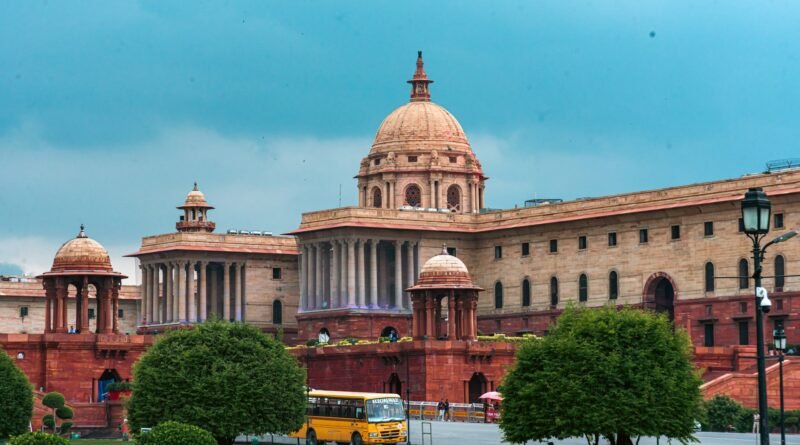
Featured image: Zoshua Colah / Unsplash (Unsplash License).