
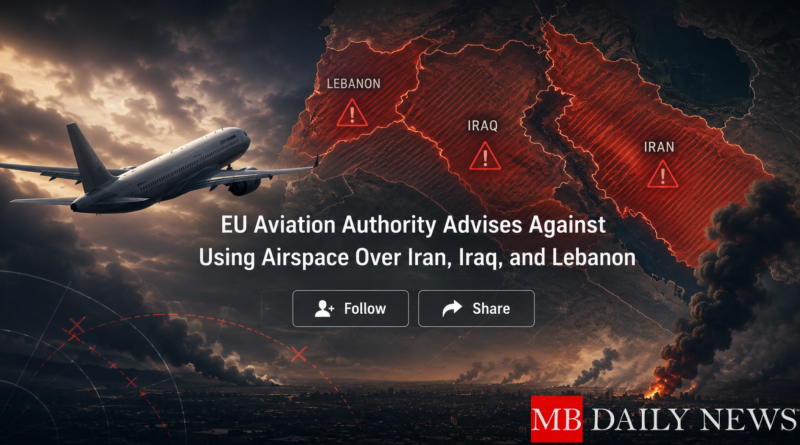
EU Aviation Authority Advises Against Using Airspace Over Iran, Iraq, and Lebanon
MB DAILY NEWS | Raleigh, NC.:
Recent guidance from the EU aviation authority urges operators to steer clear of airspace over Iran, Iraq, and Lebanon. This advisory reflects ongoing safety concerns in these regions. Airlines must evaluate the implications of this directive on their flight routes. The recommendation aims to protect passengers and crew from potential risks. Operators will need to adjust their operations accordingly. The situation underscores the complexities of air travel in volatile areas. Explorez des offres liées aux thèmes évoqués ici.
Safety Concerns in the Region
Ongoing geopolitical tensions in Iran, Iraq, and Lebanon contribute to the advisory’s urgency. Increased military activity and regional conflicts raise significant safety issues for commercial flights. Airlines must prioritize the safety of their operations and passengers. The EU aviation authority’s warning highlights the need for vigilance in air travel. Operators must stay informed about developments in these areas. Monitoring the situation will be crucial for future flight planning. Découvrez aussi des séjours et des repères utiles autour du sujet.
Impact on Airlines and Passengers
The advisory will likely disrupt flight schedules for airlines operating in or near these airspaces. Airlines may need to reroute flights, leading to longer travel times and increased operational costs. Passengers could face delays and cancellations as airlines adjust their routes. The economic implications for airlines could be significant, especially for those heavily reliant on these regions. Travelers should remain aware of potential changes to their itineraries. Communication from airlines will be essential during this period.
Regulatory Responses and Compliance
Airlines must comply with the EU aviation authority’s recommendations to ensure regulatory adherence. Non-compliance could lead to penalties or restrictions on operations. The aviation industry must work closely with regulatory bodies to navigate these challenges. Understanding the legal implications of operating in these airspaces is vital for airlines. Compliance will also enhance passenger confidence in airline safety measures. Ongoing dialogue between airlines and regulators will shape future policies.
Future Developments to Watch
As the situation evolves, airlines and regulators will need to adapt their strategies. Monitoring geopolitical developments will be crucial for assessing risks in these regions. Future advisories may change based on the security landscape. Stakeholders should remain proactive in their approach to air travel safety. The potential for escalated tensions could prompt further restrictions. Keeping abreast of updates will be essential for all involved in air travel.
Broader Implications for Global Aviation
This advisory reflects broader trends in global aviation safety and security. Airlines must navigate an increasingly complex geopolitical environment. The situation underscores the importance of risk assessment in flight operations. Stakeholders must collaborate to enhance safety protocols and procedures. The impact of such advisories extends beyond immediate operational concerns. Long-term strategies will be necessary to address evolving challenges in air travel.
Conclusion: Navigating Uncertainty
Airlines face a challenging landscape as they respond to the EU aviation authority’s advisory. The need for flexibility and adaptability will be paramount in the coming weeks. Travelers should remain informed about potential changes to their travel plans. The situation highlights the importance of safety in aviation operations. Stakeholders must work together to ensure the continued safety of air travel. Ongoing vigilance will be essential as the situation develops.
Copyright © 2026 MB Daily News. All Rights Reserved.