

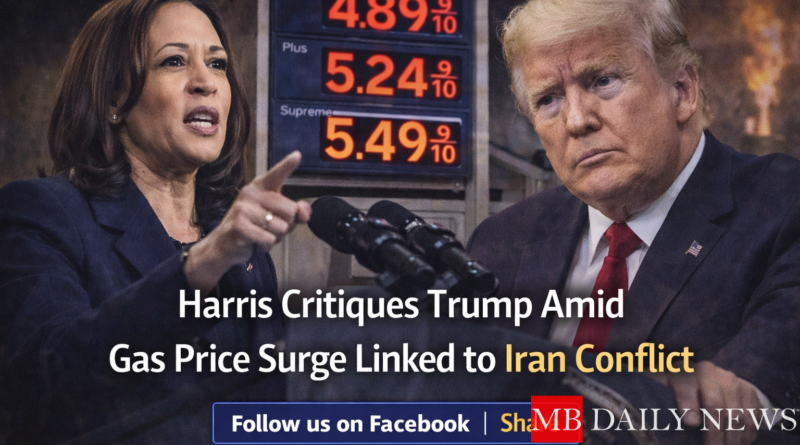
Harris Critiques Trump Amid Gas Price Surge Linked to Iran Conflict
MB DAILY NEWS | Raleigh, NC.
Former Vice President Kamala Harris has recently directed sharp criticism at President Donald Trump, attributing the current spike in gas prices to his administration’s military actions in Iran. This statement comes on the heels of soaring fuel costs that have left many Americans feeling the financial strain. Harris’s remarks underscore the ongoing political tensions surrounding energy prices and the broader implications of U.S. foreign policy.
In a recent investigative report by MB Daily News, I took a closer look at how political narratives shift in response to economic pressures. Harris’s current stance contrasts markedly with her previous comments regarding rising gas prices, which she once referred to as the “price to pay for democracy.” This juxtaposition raises questions about the evolving political landscape as both parties grapple with public sentiment over energy costs.
Blame Game in Political Rhetoric
In a social media post, Harris stated, “Here in North Carolina and around the country, gas prices are too high. This is a direct result of Donald Trump’s war of choice in Iran, and the American people are paying the price.” Her comments were accompanied by a video showing her addressing the issue at a gas station, reinforcing the personal connection she seeks to establish with voters affected by these rising costs.
Harris’s remarks highlight a significant pivot in political discourse, particularly as the average price of regular gasoline has skyrocketed to over $4 per gallon, a direct consequence of the military conflict that unfolded following U.S. and Israeli strikes on Iran.
Context of Rising Prices
The escalation of gas prices is not merely a financial issue; it reflects deeper geopolitical tensions. The conflict in Iran has led to retaliatory actions that have disrupted oil supplies, particularly in the Persian Gulf, where Iran has targeted energy facilities and made key shipping routes perilous. This situation underscores the fragility of global energy markets and the potential for political decisions to have far-reaching economic consequences. In that sense, the story also echoes similar developments that have surfaced around the same issue in recent coverage, adding a wider frame to the immediate headline.
“In my view, this development matters not only for the immediate political moment, but for the wider conversation it may intensify.”
The Political Stakes
Harris’s critiques come as the Biden administration faces mounting pressure to address inflation and rising costs, which have become central issues for voters ahead of the upcoming elections. The link between gas prices and foreign policy decisions complicates the narrative for both parties, as they navigate the balance between national security and domestic economic stability.
“We’ve got a president who is paying more attention to what he thinks is in his best political interests and personal interests, as opposed to what is in the best interest of working people in America,” Harris asserted, emphasizing the disconnect she perceives between leadership and the American public’s needs.
Broader Implications for Voters
As the political landscape shifts, voters are increasingly attentive to how international conflicts impact their daily lives, particularly through the lens of rising fuel costs. The discourse surrounding gas prices serves as a litmus test for broader economic policies and the effectiveness of political leadership in addressing the concerns of ordinary citizens.
Potential Consequences Ahead
The implications of these rising gas prices extend beyond immediate economic discomfort. They may influence voter behavior in upcoming elections, shaping narratives around accountability and governance. As both parties prepare for the electoral battleground, the handling of energy prices will likely be a pivotal issue that could sway public opinion.
Looking Forward
In closing, Harris’s recent comments reflect a strategic pivot in addressing the complexities of energy policy and its political ramifications. As the fallout from international conflicts continues to reverberate through domestic markets, the question remains: how will these rising gas prices shape the political discourse leading into the next election cycle?