

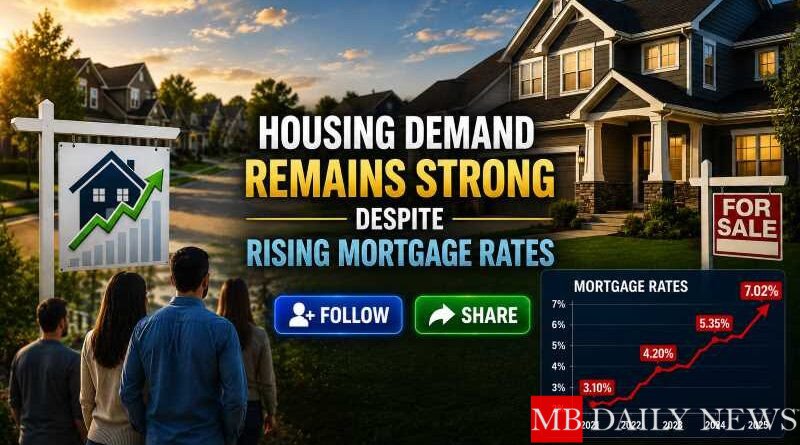
Housing Demand Remains Strong Despite Rising Mortgage Rates
MB DAILY NEWS | Raleigh, NC.
Housing demand remains strong: The housing market continues to show surprising resilience even as mortgage rates rise. Recent data suggests housing inventory is approaching a negative year-over-year trend, a scenario few analysts expected for 2026. At the same time, ongoing geopolitical tensions, including discussions surrounding a possible peace deal with Iran, could also influence broader housing market conditions.
In a recent investigative report for MB Daily News, I examined how the current economic environment is shaping the housing market. Although mortgage rates have climbed by as much as 0.76% from earlier lows, buyers remain active. The latest figures show a modest 0.89% year-over-year increase in housing inventory, signaling that demand remains solid despite tightening supply.
Understanding Inventory Dynamics
Two primary factors explain the near-negative year-over-year inventory trend. First, strong inventory growth during the early part of last year coincided with elevated mortgage rates, which initially slowed buyer activity. Later, when rates dropped below 6.64% and moved closer to 6%, buyer demand accelerated sharply, making year-over-year comparisons more difficult.
This relationship between mortgage rates and buyer behavior shows that the market is adapting, although not always predictably. Seasonal influences, including the Memorial Day period and summer buying activity, could further shape these trends in the coming months.
“The market is showing signs of resilience, with buyers actively seeking opportunities despite the challenges posed by rising rates.”
Recent national coverage has echoed similar observations, reinforcing the broader significance of these developments.
Market Trends and Buyer Sentiment
Recent pending home sales data points to continued momentum, with gains recorded both week over week and year over year. Buyers appear willing to navigate higher borrowing costs in order to secure homes, reflecting sustained confidence in the market.
“In my reporting, this development becomes even more significant when viewed alongside broader national economic pressures.”
The Bigger Economic Picture
Although rising mortgage rates usually discourage buyers, the current market continues to defy expectations. Broader economic and geopolitical developments, including negotiations involving Iran, may also be shaping consumer confidence and housing activity.
“The resilience of housing demand despite rising rates may indicate a shift in buyer behavior and market expectations.”
Comparing Today’s Market With Previous Years
Current inventory levels differ sharply from the severe supply shortages seen between 2020 and 2023. The present 0.89% inventory growth reflects a healthier and more balanced market than in prior years. While challenges remain, supply conditions are no longer as constrained as they once were.
Implications for Home Prices
Strong housing demand is likely to place continued upward pressure on home prices. As inventory tightens, buyers may face increased competition for available properties. This environment could create additional affordability challenges, particularly for first-time buyers and households with limited budgets.
Looking Ahead
As 2026 progresses, housing market trends will remain closely watched. If inventory levels move into negative year-over-year territory, questions about the sustainability of current demand will intensify. Stable or declining mortgage rates could further stimulate buyer activity. On the other hand, additional rate increases may introduce new pressures on both demand and pricing.
In conclusion, the housing market reflects a complex mix of economic forces that require careful monitoring. Strong demand in the face of rising mortgage rates may signal changing market dynamics, but uncertainty remains as broader economic and geopolitical conditions continue to evolve.