
Penny Wong Speech Warns US-China Rivalry Is Losing Its Guardrails
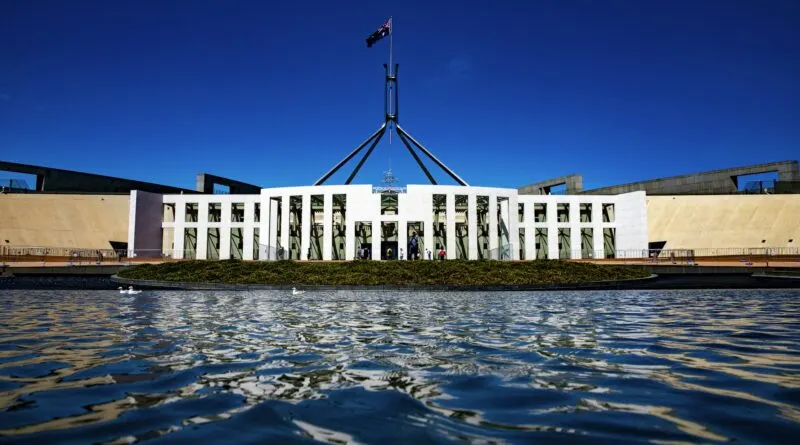
Foreign Minister Penny Wong’s major foreign policy statement to the Senate warns that the United States and China are competing “across every domain, with less regard for the guardrails that once kept competition from tipping into conflict”. The speech, titled “Securing Australia’s Future in a Changing World”, was scheduled for Tuesday 24 November in Canberra, with excerpts released in advance and reported by the ABC and AAP. It sets out how the Albanese Government intends to protect Australian interests as great-power rivalry sharpens, by leaning harder on partnerships with other middle powers rather than stepping back from the US alliance or from multilateral institutions.
What Penny Wong’s speech says about the US and China
According to the excerpts, Wong argues that the shift under way is not about who holds power but about how willingly it is used. “What is changing today is the great powers’ willingness to exercise power,” she says, adding that “a more fragmented and complex world is emerging”.
On China, the statement is blunt. “China is undertaking the largest military build-up by any country since the Second World War,” Wong says, according to the ABC, which reported that she describes the build-up as lacking the transparency and reassurance the region expects. She also argues that Beijing is seeking to remake the multilateral system, while maintaining that “a stable relationship, in which differences can be managed, is better for Australia”.
The speech frames the core dilemma in a single line: “Rules without power cannot secure peace. Power without rules cannot sustain it.”
Why Wong rejects calls to walk away from the US alliance
The statement comes weeks after the US midterm elections, which AAP and the ABC described as a heavy loss for President Donald Trump and the Republicans. Wong acknowledges that US foreign policy is “still being contested at home in ways that will affect the entire world”, but pushes back against those in Australia who argue for distance from Washington.
“There are those that say uncertainty about American policy means Australia should abandon America,” she says, according to AAP. “What they would do is give us fewer choices and leave us more vulnerable.” She describes the US as “a vigorous democracy with the ability to remake and re-imagine itself”, and AAP reported that she continues to see a US military role in keeping the Indo-Pacific stable. Defence ties with Washington remain under close scrutiny in Canberra, including the future of the AUKUS submarine program, which MB Daily News covered when Defence Minister Richard Marles rejected a US budget office warning on the fleet.
Middle powers, the UN and artificial intelligence
The central argument of the speech is that countries such as Australia, India, Indonesia, Japan and South Korea have more room to shape outcomes than they once did, but must work together to use it. “It is increasingly costly for middle powers and smaller nations to simply hold the strategic space they have,” Wong says, describing “amplified middle power diplomacy” as the government’s approach. The ABC reported that the speech also points to deeper ties with nations in Africa and Latin America.
Wong defends the United Nations while conceding its weaknesses, saying it faces “serious financial pressures” and that decision-making is “too often paralysed by great power dynamics”. She warns that walking away from multilateralism “would leave a vacuum, and vacuums are rarely filled by peace”, and calls for reform of the UN Security Council.
Artificial intelligence features prominently. According to AAP, Wong says the race to build frontier AI, “concentrated in a handful of companies and countries, does not reward speed over prudence”, and that Australia intends to help shape global rules as it did on nuclear non-proliferation and online safety. “We welcome frontier AI investment and innovation, but on terms that work for all Australians,” she says. She also warns that AI tools make foreign interference “faster, cheaper and harder to recognise”. Speaking on ABC News Breakfast on Tuesday morning, Wong said AI was “already changing how wars are fought”.
What it means and what comes next
The statement lands on a busy day for Australian diplomacy. Prime Minister Anthony Albanese is hosting Singapore’s Prime Minister Lawrence Wong in Canberra for the 11th Singapore–Australia Annual Leaders’ Meeting, with the agenda covering the Comprehensive Strategic Partnership, supply chain resilience and technology cooperation, according to the Prime Minister’s office. Solomon Islands Prime Minister Matthew Wale is also expected in Canberra this week, the ABC reported.
For Australians, the practical message is that the government does not plan a sharp break in either direction: it will keep the US alliance at the centre of its security policy, keep stating disagreements with Beijing while seeking stable ties, and invest more diplomatic effort in regional partners. No reaction from the Coalition or the Greens had been published at the time of writing.
Featured image: Marcus Reubenstein / Unsplash (Unsplash License).