

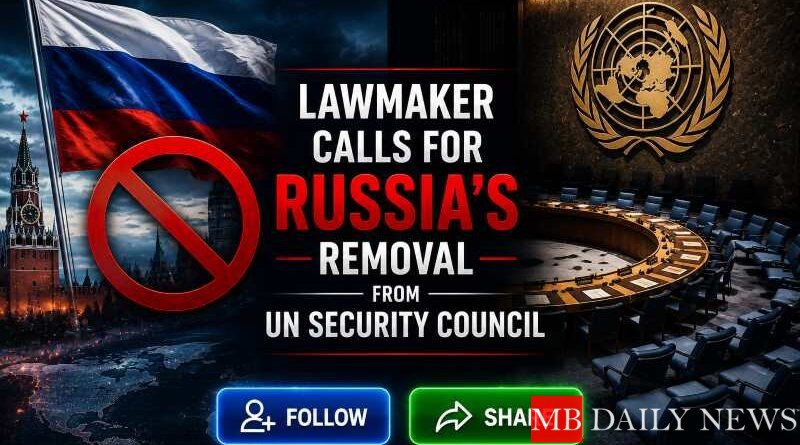
Lawmaker Calls for Russia’s Removal from UN Security Council
MB DAILY NEWS | Raleigh, NC.
In a bold statement highlighting ongoing geopolitical tensions, U.S. Congressman Don Bacon has called for Russia’s removal from the United Nations Security Council. His position reflects growing frustration among lawmakers who believe Russia’s actions are incompatible with the responsibilities of a permanent Security Council member.
In a recent investigative report for MB Daily News, I examined the implications of this proposal. Bacon, a Republican representing Nebraska, has repeatedly described Russia as a “pariah state.” He has reinforced that position through several public statements and social media posts.
His comments come as the war in Ukraine continues and international scrutiny of Russia intensifies. Consequently, discussions about Russia’s role in global institutions have gained renewed attention.
Rising Tensions and Calls for Action
Bacon argues that Russia’s invasion of Ukraine directly contradicts the principles the United Nations seeks to uphold. Therefore, he believes the country should no longer hold a permanent seat on the Security Council.
“The United Nations General Assembly should vote on removing the Russians from the Security Council. Russia is a pariah state and should be treated that way,” Bacon stated.
Furthermore, his remarks reflect broader criticism of the UN’s handling of Russia’s position in international affairs. Many critics contend that allowing Russia to retain significant influence weakens the organization’s credibility and undermines its mission to promote peace and security.
Bacon has also criticized Russia’s leadership role within the Security Council.
“It is an obscene reality that Russia now chairs the UN Security Council. We should kick the Russians out of as many international organizations and forums as possible,” he wrote in an earlier statement.
The Impact of Russia’s Actions
The call for Russia’s removal is not merely symbolic. Instead, it comes amid a humanitarian crisis that continues to unfold in Ukraine.
Ongoing military operations, civilian casualties, and allegations of war crimes have prompted many lawmakers to demand stronger international responses. In addition, Bacon has advocated for increased military assistance to Ukraine. He argues that the United States must continue supporting its allies against Russian aggression.
As a result, the debate extends beyond diplomatic symbolism and touches on broader questions of accountability and international law.
Broader Implications for International Relations
The proposal also highlights changing dynamics in global politics. As Russia faces growing isolation from Western nations, discussions about the future of international alliances have become more prominent.
Moreover, efforts to challenge Russia’s status within international organizations could influence diplomatic strategies across multiple regions. Such actions may also encourage other countries to reconsider their relationships with Moscow.
Bacon summarized his position in a recent statement:
“The United Nations is an embarrassment with Russia sitting on the Security Council. Russia invaded its neighbor and is committing crimes against humanity.”
His comments underscore the urgency many lawmakers attach to the issue.
Legislative Action and Political Momentum
Meanwhile, the House of Representatives is preparing to consider additional military aid for Ukraine. Because of that, discussions about Russia’s role within the UN are likely to receive increased attention.
Bacon’s support for tougher sanctions aligns with a growing view in Washington that stronger measures are necessary to counter Russia’s military actions. At the same time, public support for a more assertive response appears to be increasing.
This shift in public opinion could influence future legislative priorities and shape policy debates in the months ahead.
Looking Ahead
The effort to remove Russia from the UN Security Council represents a significant moment in the broader discussion about international governance and accountability.
However, achieving such a change would face substantial legal and diplomatic obstacles. Even so, the proposal highlights growing dissatisfaction with the current structure of international institutions.
As the conflict in Ukraine continues, the response from the United States and its allies will remain critical. Ultimately, the debate may help shape the future role of the United Nations and its ability to address major global conflicts.