

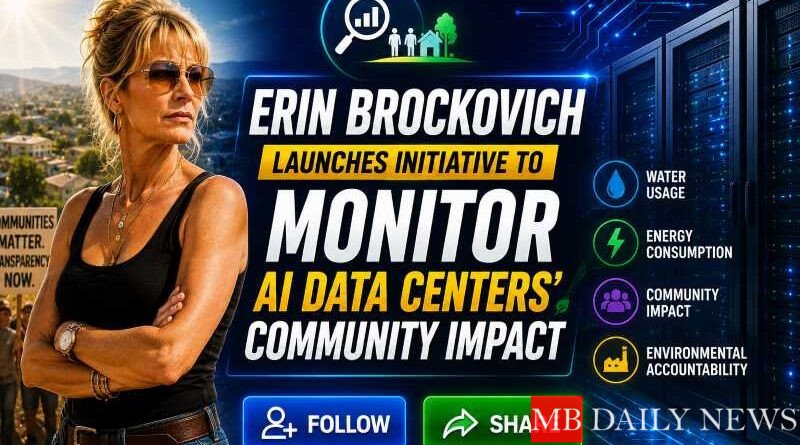
Erin Brockovich Launches Initiative to Monitor AI Data Centers’ Community Impact
MB DAILY NEWS | Raleigh, NC.
In a significant move to empower communities affected by artificial intelligence data centers, consumer advocate Erin Brockovich has unveiled a new tool designed to address growing concerns surrounding these facilities.
The initiative arrives as AI infrastructure expands at a rapid pace. In many cases, projects move forward without extensive community consultation or careful consideration of local impacts. To address this gap, Brockovich developed an interactive map that overlays operational and under-construction AI data centers with reported community concerns. As a result, residents can better understand the real-world footprint these facilities leave on neighborhoods across the country.
In a recent investigative report for MB Daily News, I examined how Brockovich’s tool could reshape the conversation surrounding AI data centers and their effects on local communities. The platform allows residents to self-report issues, creating a space where their concerns can be documented and shared.
Mapping Community Concerns
The project was inspired by a wave of messages from residents in a single community who were alarmed by the impact of a nearby AI data center.
“I got, overnight, 30 emails from the same community with a concern,” Brockovich said during a recent interview.
That experience prompted her to create a centralized resource where people across the nation could report their experiences and observations regarding AI infrastructure.
Since its launch, the map has gained significant traction. More importantly, it reveals a consistent pattern: communities across the country are reporting many of the same concerns. Although AI data centers support technological innovation, residents argue that these facilities often create challenges that affect their quality of life.
The Growing Debate Over AI Infrastructure
Federal support has accelerated the development of AI data centers in recent years. During the Trump administration, several initiatives sought to streamline construction through executive orders and regulatory changes.
However, Brockovich believes this fast-tracked approach has frequently excluded local communities from the decision-making process.
“They don’t have a seat at the table,” she said, referring to residents affected by major infrastructure projects.
At the same time, concerns continue to grow over the enormous amounts of energy and water consumed by AI facilities. Consequently, many residents worry about rising utility costs, resource strain, and potential environmental degradation.
For that reason, Brockovich argues that transparency and accountability must become central components of future AI development.
“People are reporting the exact same issues, and they feel unheard,” she noted.
Environmental and Social Challenges
The impact of AI data centers extends beyond economic considerations. Residents living near these facilities have raised concerns about noise pollution, land use changes, increased traffic, and potential effects on local wildlife.
Furthermore, community leaders have questioned whether environmental reviews adequately address long-term consequences. Brockovich’s initiative aims to bring greater visibility to these issues while encouraging more responsible development practices.
By collecting firsthand reports from residents, the platform helps document concerns that might otherwise go unnoticed.
A National Conversation
The launch of the mapping tool coincides with a broader national debate about the rapid expansion of technology infrastructure. As artificial intelligence becomes increasingly integrated into everyday life, questions about its impact on local communities are becoming more urgent.
Meanwhile, grassroots organizations in several states are advocating for stronger oversight and more comprehensive assessments of large-scale technology projects. These efforts reflect a growing demand for greater community involvement in infrastructure planning.
What Comes Next?
As the discussion surrounding AI data centers continues to evolve, the stakes for affected communities remain high. Brockovich’s initiative serves not only as a reporting platform but also as a potential catalyst for policy changes.
Its long-term effectiveness will depend on public participation and the willingness of local, state, and federal officials to respond to community concerns. If engagement continues to grow, the tool could increase pressure on policymakers to address the environmental and social consequences of AI infrastructure.
Ultimately, the initiative may mark an important shift in how technology projects are planned, encouraging a more inclusive approach that prioritizes the voices of the communities most directly affected.