
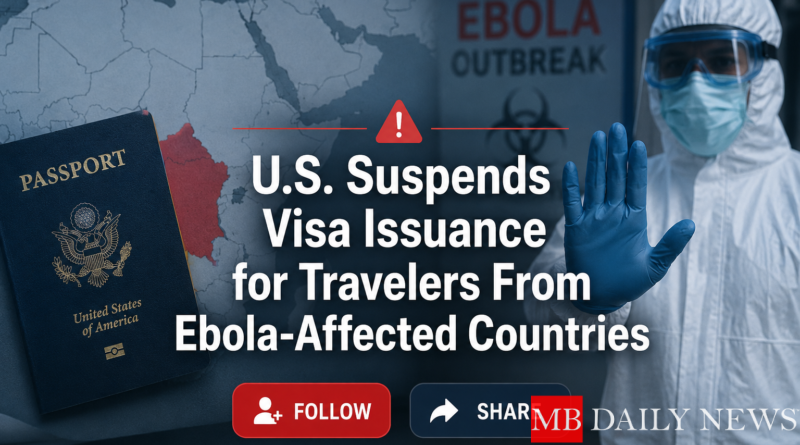
U.S. Suspends Visa Issuance for Travelers From Ebola-Affected Countries
MB DAILY NEWS | Raleigh, NC.
TheThe United States has temporarily suspended visa issuance for travelers who recently visited countries affected by the latest Ebola outbreak. Officials confirmed the decision after concerns grew over the rapid spread of the virus in Central Africa.
The restriction applies to travelers who have been in South Sudan, the Democratic Republic of Congo, or Uganda within the last 21 days before entering the United States.
U.S. Introduces New Travel Restrictions
The U.S. government introduced the temporary visa suspension to reduce the risk of Ebola entering the country. Health officials continue monitoring the outbreak while federal agencies increase screening efforts at airports and border checkpoints.
Travelers connected to the affected countries may experience delays, additional health checks, or temporary visa denials until authorities complete medical evaluations.
Officials have not confirmed when the restrictions will end.
Emergency Resources Sent to Central Africa
The Trump administration is also increasing emergency support for the affected regions. The government has redirected medical resources, protective equipment, and response teams to Central African countries battling the outbreak.
Officials are working with international health organizations to improve containment efforts and support local healthcare systems.
The decision marks a significant shift after earlier reductions in U.S. foreign aid to parts of Africa.
Health Experts Warn About Ebola Risks
Health authorities continue warning that Ebola remains one of the deadliest infectious diseases in the world. The virus spreads through direct contact with infected bodily fluids or contaminated materials.
Common symptoms include:
- Fever
- Fatigue
- Vomiting
- Severe weakness
- Internal bleeding
Experts stress that early detection and isolation remain essential to controlling outbreaks.
Airports Increase Screening Procedures
U.S. airports are expected to strengthen health screening procedures for travelers arriving from Central Africa. Federal agencies, including the Centers for Disease Control and Prevention (CDC), are coordinating with airlines and border officials to identify possible exposure risks.
Authorities may require health questionnaires, temperature checks, and monitoring for travelers entering the country.
Global Health Officials Monitor the Situation
International health organizations continue monitoring the outbreak closely. Governments worldwide are reviewing travel policies and emergency preparedness plans as concerns about cross-border transmission grow.
The World Health Organization is expected to release additional updates and recommendations as the situation develops further.