
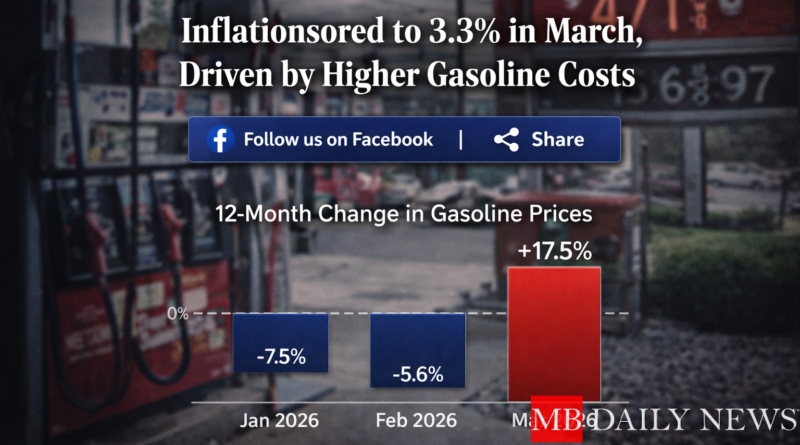
Inflation Soared to 3.3% in March, Driven by Higher Gasoline Costs
April 10, 2026 | MB Daily News | Los Angeles CA
Inflation surged to 3.3% in March, marking its highest level in two years as gasoline prices spiked sharply amid escalating global tensions. The latest data signals a significant shift in the economic outlook, especially as this is the first major inflation report released since the onset of the Iran conflict.
The sudden increase highlights how quickly geopolitical events can ripple through the global economy, with energy costs once again becoming a dominant force behind rising consumer prices.
Gasoline Prices Drive Inflation Spike
The primary catalyst behind the March inflation surge was a steep rise in gasoline prices. Energy markets reacted immediately to instability in the Middle East, pushing oil prices higher and translating into increased costs at the pump.
Gasoline prices experienced one of their sharpest jumps in recent years, reversing earlier declines and significantly impacting the overall Consumer Price Index (CPI).
Because fuel costs affect nearly every sector—from transportation to manufacturing—the increase has amplified price pressures across the economy.
Largest Monthly Increase in Years
On a month-to-month basis, inflation rose by 0.9%, representing the largest increase in nearly four years. Economists point to gasoline as the single biggest contributor, with energy prices surging at a pace that outstripped most forecasts.
This rapid acceleration has raised concerns that inflation may no longer be on a steady downward path, as previously expected earlier in the year.
Impact on American Households
Higher gasoline prices are among the most visible and immediate costs for consumers. Drivers across the country are now paying significantly more at the pump, placing added pressure on household budgets already strained by higher food and housing costs.
The ripple effects extend beyond fuel expenses:
- Transportation and delivery costs are increasing
- Food prices are rising due to higher logistics expenses
- Airfare and travel costs are climbing
- Businesses are passing increased costs onto consumers
For many families, the combined effect is reducing purchasing power and forcing adjustments in spending habits.
Federal Reserve Faces Tough Decisions
The unexpected rise in inflation complicates the Federal Reserve’s policy outlook. With inflation moving further away from its 2% target, the central bank may be forced to delay planned interest rate cuts.
Officials are now closely monitoring whether the surge is temporary or signals a more persistent trend driven by global instability and energy costs.
Geopolitical Tensions Fuel Economic Uncertainty
The Iran conflict has disrupted key oil supply routes, particularly around the Strait of Hormuz, one of the world’s most critical energy corridors. This disruption has introduced volatility into oil markets, pushing prices upward and contributing directly to inflation.
Even if tensions ease, economists warn that the effects could linger due to supply chain adjustments and continued uncertainty in global energy markets.
What Comes Next
Looking ahead, the trajectory of inflation will largely depend on energy prices and geopolitical developments. If gasoline prices stabilize, inflation may begin to moderate. However, continued volatility could keep inflation elevated longer than expected.
For now, the March report serves as a stark reminder of how quickly economic conditions can change, especially when global conflicts intersect with critical supply chains.
Consumers, policymakers, and markets alike are bracing for continued uncertainty in the months ahead.
Create an LLC in minutes and expose your products or services to millions of consumers. Start now Conaih
External Links
Stay Connected
Follow us on Facebook and stay updated with the latest breaking news Here MB Daily News.
MB Daily News 2026 Copyright – All Rights Reserved.