
AUKUS Submarines: Marles Rejects US Budget Office Fleet Warning
Defence Minister Richard Marles has rejected a United States Congressional Budget Office (CBO) finding that selling Virginia-class submarines to Australia would shrink the US Navy’s attack submarine fleet for years, insisting the AUKUS submarines plan remains on track. The dispute matters for Australian taxpayers because Canberra has committed A$368 billion over three decades to the pact, and its first boats depend on American shipyards building faster than they do today.
Speaking on the ABC’s Insiders program on Sunday, Mr Marles was asked whether the US budget office was wrong. “Yes, they are wrong. The production rate in the United States is absolutely increasing,” he said, according to the ABC. He added: “The reason it doesn’t worry me is because AUKUS is very much happening.”
What the CBO report says about AUKUS submarines
The warning appears in the CBO’s analysis of the US Navy’s fiscal year 2027 shipbuilding plan, published on 19 November. In a box on AUKUS, the nonpartisan office notes that the pact calls for Washington to sell at least three, and possibly five, Virginia-class nuclear-powered attack submarines to Australia as an interim step, with the Navy indicating sales in 2032, 2035 and 2038.
The CBO points out that the Navy’s 2027 plan has not factored those transfers into its future submarine numbers. Its central conclusion is blunt: “The sale of SSNs to Australia would reduce the number of attack submarines available to the Navy for many years.” It also states that “the U.S. submarine industrial base is currently struggling to meet the Navy’s demand for submarines.”
The office modelled three illustrative scenarios through to 2060:
- Three used boats sold in the 2030s, no replacements: the US fleet loses 68 operational submarine-years between 2032 and 2060, equal to 29 fewer deployments.
- Five boats sold between 2032 and 2044, no replacements: the Navy has three to five fewer attack submarines for most of 2033 to 2053, losing 104 operational years and 44 deployments.
- Five boats sold and five replacements built: production would need to rise to about 2.3 submarines a year in the 2030s and 2040s; the fleet is still smaller until 2052 but slightly larger than planned by 2055.
The Navy’s current plan already assumes shipyards will deliver two attack submarines a year from 2027. The office also estimates that Virginia-class boats ordered from 2030 would cost about US$4.9 billion each, above the Navy’s own figure of US$4.3 billion.
Why Marles says the AUKUS deal is on track
Mr Marles agreed that the US production rate was a critical part of Australia receiving its submarines, the ABC reported, but he disputed any suggestion that output was flat. He said sustainment and maintenance work also mattered if Australia was to receive its first Virginia-class boat in the early 2030s, a timeline he reaffirmed in October, according to Reuters.
Reuters reported that the CBO did not immediately respond to a request for comment. The AUKUS figures are an illustration built on the Navy’s plan rather than a formal CBO estimate of the agreement.
What happens next for Australia’s nuclear submarine plan
Under AUKUS, US-commanded Virginia-class submarines are due to be based in Australia from next year, before the sale of several boats to Australia from around 2030. Britain and Australia also plan to build a new AUKUS class of nuclear-powered submarine.
The CBO prepares such analyses for Congress, so its findings give US lawmakers fresh figures as they weigh the Navy’s long-term shipbuilding budget. For Canberra, the key test will be whether American yards can lift output towards two boats a year and beyond. That will decide whether the Royal Australian Navy receives its submarines on schedule without leaving the US fleet short.
The debate follows a busy fortnight of regional diplomacy for the Albanese government, including the Prime Minister’s meeting with Chinese President Xi Jinping in Shenzhen on the sidelines of APEC.
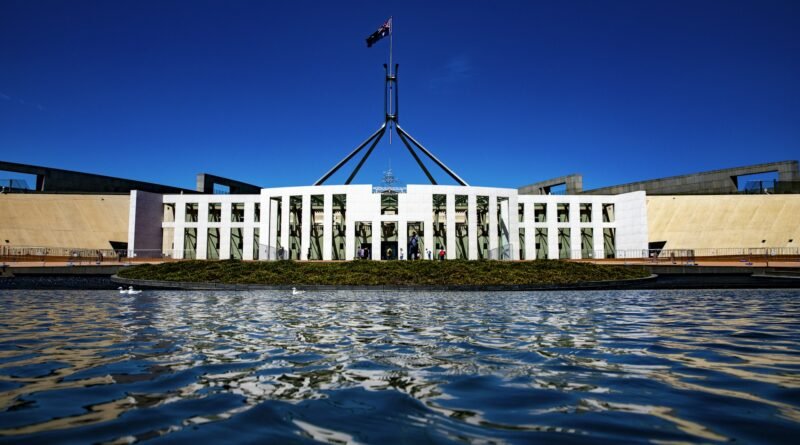
Featured image: Marcus Reubenstein / Unsplash (Unsplash License).