
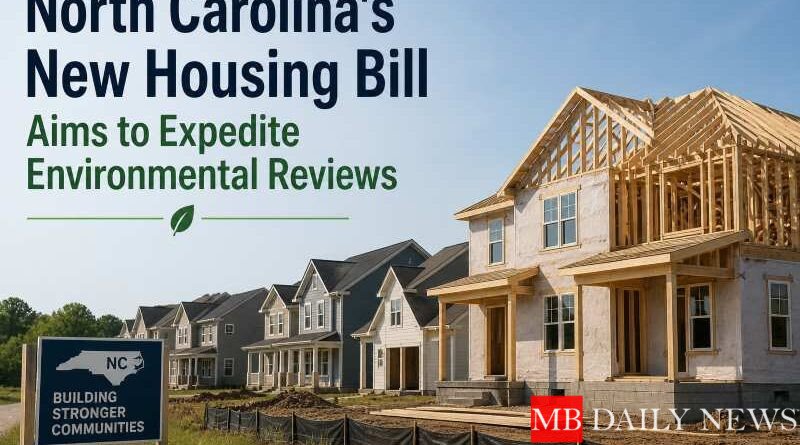
North Carolina’s New Housing Bill Aims to Expedite Environmental Reviews
MB DAILY NEWS | Raleigh, NC.
North Carolina legislators are pushing new reforms to address the state’s growing housing crisis. In particular, they want to speed up construction and reduce delays. To achieve this, Democratic Senator Woodson Bradley introduced the “Let Them Build Act.” This bill aims to streamline environmental reviews and accelerate residential projects across the state.
At the same time, House Democrats proposed a similar measure called “Relieving Housing Bottlenecks.” As a result, both efforts show a coordinated push to increase housing supply.
In a recent investigative report by MB Daily News, I examined the impact of these proposals. Meanwhile, other states face similar housing shortages. For example, New York and California are also working to reduce regulatory barriers. Therefore, North Carolina’s strategy follows a broader national trend.
Streamlining Environmental Reviews
The “Let Them Build Act” focuses on removing duplicate environmental reviews. Specifically, it allows developers to rely on federal or local reviews if they already meet state standards. Because of this change, projects could move forward faster.
Currently, multiple reviews often delay construction. However, the new proposal eliminates unnecessary steps. As a result, developers can secure approvals more quickly and begin building sooner.
Although the bill is shorter than similar laws in other states, it follows the same deregulatory approach. For instance, New York leaders are updating a decades-old environmental review system. Consequently, urgency continues to grow as housing demand rises.
“Inaction on housing reform is no longer an option; we need to act decisively to meet community needs.”
Comparing Legislative Approaches
Both North Carolina and New York aim to speed up environmental reviews. However, their approaches differ.
In New York, lawmakers want to reclassify certain housing projects as low-impact. This change would allow faster approvals. In addition, it supports a $25 billion housing plan designed to address long-term shortages.
By contrast, North Carolina focuses on simplifying existing processes rather than redefining project categories. Even so, both strategies share the same goal: faster housing development.
“This development becomes more significant when viewed alongside national trends.”
Why This Matters
Lawmakers increasingly recognize the need to balance housing demand with environmental protection. On one hand, strict reviews protect ecosystems. On the other hand, long delays reduce housing supply and raise costs.
Because of this tension, many officials support reform. They believe faster approvals can lower prices and increase availability. At the same time, they want to maintain key environmental safeguards.
“We must protect environmental standards while also enabling new housing.”
Lessons from Other States
California offers a useful example. Recently, the state exempted many urban housing projects from environmental review requirements. As a result, construction increased in high-demand areas.
However, these changes also sparked debate. Critics worry about reduced oversight. Still, supporters argue that faster development benefits communities.
Therefore, North Carolina can learn from both the successes and challenges seen in California.
Wider Implications for Communities
The proposed reforms could reshape the housing market. If successful, they may increase supply and improve affordability. Consequently, more residents could access homeownership.
However, the changes also raise concerns. Some groups fear reduced environmental protections and less community input. Because of this, lawmakers must carefully balance competing priorities.
Looking Ahead
As the legislative session continues, the future of this bill remains uncertain. Nevertheless, its impact could be significant. If approved, it would speed up construction and reshape housing policy.
In the long term, the debate will likely continue. Lawmakers must balance development needs with environmental responsibility. Ultimately, their decisions will shape North Carolina’s housing landscape for years to come.