
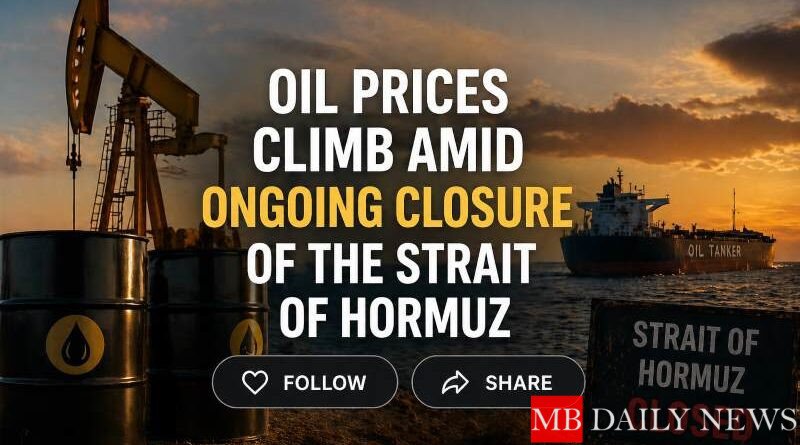
Oil Prices Climb Amid Ongoing Closure of the Strait of Hormuz
MB DAILY NEWS | Raleigh, NC.
Oil prices climb: Oil prices experienced an uptick as the critical Strait of Hormuz continues to face closures, now entering its third month. The prolonged disruption stems from stalled peace negotiations related to the ongoing conflict in Iran, raising concerns among investors about the stability of oil supplies from the region.
In a recent investigative report by MB Daily News, I took a closer look at the implications of these developments on global market dynamics. The Strait of Hormuz is a crucial artery for oil transportation, and any obstruction can lead to significant price fluctuations and heightened volatility across energy markets.
Market Response to Ongoing Tensions
The stalling of peace talks has left traders on edge, with many anticipating further disruptions. Oil prices are sensitive to geopolitical tensions, and the current situation is no exception. As countries around the world monitor the conflict closely, the potential for additional supply constraints looms large.
This situation has prompted a cautious approach among investors, who are weighing the risks of escalating tensions against the backdrop of an already volatile market.
“The market is reacting to the uncertainty surrounding oil supplies; any hint of prolonged disruption can lead to significant price increases.” In that sense, the story also echoes similar developments that have surfaced around the same issue in recent coverage, adding a wider frame to the immediate headline.
Broader Implications for Global Supply Chains
The ramifications of the Strait’s closure extend beyond just oil prices. A sustained disruption in this vital shipping lane could impact global supply chains, affecting everything from transportation costs to consumer prices. Companies reliant on stable oil supplies are already adjusting their forecasts, anticipating potential spikes in operational costs.
“In my reporting, this kind of movement often says as much about sentiment as it does about the numbers themselves.”
Understanding Investor Sentiment
Investor sentiment is increasingly influenced by these geopolitical developments. With oil being a key driver of inflation, fluctuations in prices can have broader economic implications. Analysts suggest that if tensions persist, central banks may need to reconsider their monetary policies to address the potential impacts on inflation rates.
“The intersection of geopolitical events and economic policy will be crucial in the coming weeks as investors navigate these turbulent waters.”
Comparative Analysis with Past Events
This scenario bears resemblance to previous instances where geopolitical tensions resulted in spikes in oil prices. Historical patterns indicate that markets often react sharply to news from the region, and this time may not be different. Traders are likely to remain vigilant as the situation unfolds, prepared for rapid shifts in sentiment.
Financial and Social Consequences
The ongoing situation is not just a financial concern; it also has social ramifications. Rising oil prices can lead to increased transportation costs and higher prices for goods, affecting everyday consumers. As families and businesses feel the pinch, broader economic confidence may wane, potentially leading to a ripple effect across various sectors.
Looking Ahead: What Investors Should Expect
As the closure of the Strait of Hormuz continues, investors should brace for further volatility in oil markets. The interplay between geopolitical tensions and economic indicators will likely dictate market movements in the near term. Analysts suggest that keeping a close eye on developments in the region will be crucial for making informed investment decisions.