

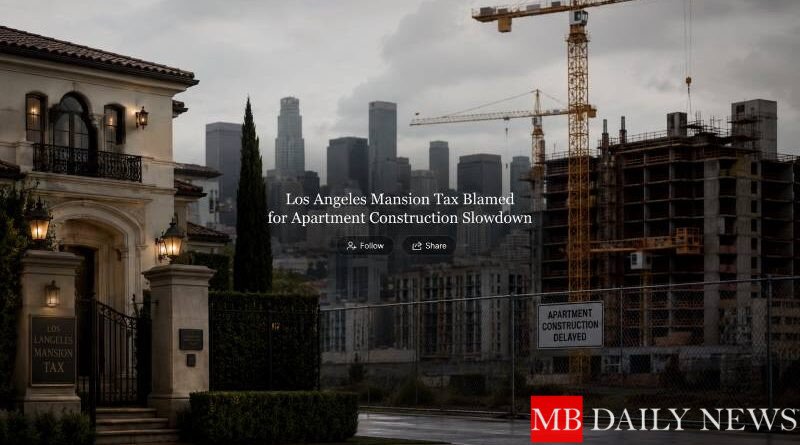
Los Angeles Mansion Tax Blamed for Apartment Construction Slowdown
MB DAILY NEWS | Raleigh, NC.
A controversial property transfer tax in Los Angeles is causing concern among developers and housing experts. Many believe the policy is slowing apartment construction and worsening the city’s housing shortage.
The tax, known as Measure ULA, targets high-value real estate transactions. City leaders introduced it to fund homelessness prevention and affordable housing programs. However, developers say the measure is also reducing investment in new residential projects.
Developers Pull Back From New Apartment Projects
Jason Grant, a Los Angeles developer, planned to build an eight-story apartment complex near Venice Beach. The project included two neighboring parcels zoned for high-density housing.
Grant bought the first property in early 2023 as rental demand increased across the city. Before he could purchase the second parcel, the new transfer tax took effect.
The additional costs changed the economics of the development. Grant later decided to walk away from the deal because the project no longer produced enough long-term value.
His experience reflects a broader trend in Los Angeles. Several developers have delayed or canceled apartment projects since the tax became law.
Housing Shortage Could Become Worse
Housing analysts warn that Los Angeles already faces a serious lack of housing inventory. Rising rents and limited supply continue to pressure residents across the region.
Developers argue that the transfer tax discourages large housing projects that could help increase supply. Some industry groups have also reported a decline in multifamily investment activity during the past year.
Experts say fewer apartment projects could make affordability challenges even worse in the future.
City Officials Review Possible Changes
Los Angeles officials are now considering adjustments to Measure ULA. Policymakers want to protect funding for homelessness programs while encouraging more residential development.
Possible revisions include exemptions for apartment construction projects or changes to the tax thresholds.
Supporters of the tax believe the revenue remains essential for affordable housing initiatives. Critics, however, argue that reduced construction could limit future housing availability.
Los Angeles Faces Critical Housing Debate
The discussion surrounding Measure ULA highlights a growing challenge for Los Angeles. City leaders must balance public funding needs with the urgent demand for new housing.
Developers, investors, and residents continue to watch closely as officials evaluate possible reforms. The final outcome could shape the future of apartment construction across Los Angeles for years to come.