
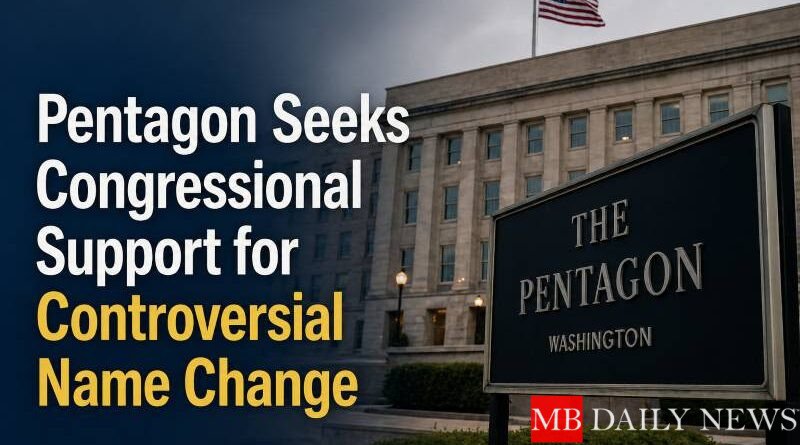
Pentagon Seeks Congressional Support for Controversial Name Change
MB DAILY NEWS | Raleigh, NC.
Pentagon name change proposal: The Pentagon has formally approached Congress with a request to endorse a controversial rebranding initiative that would change the Department of Defense to the “Department of War.” This proposal, which has sparked significant debate, carries an estimated cost of nearly million and entails making approximately 7,600 updates to federal law. As the political landscape shifts, this move raises questions about symbolism, intent, and the broader implications for U.S. military policy.
In a recent investigative report by MB Daily News, I took a closer look at the motivations behind this rebranding effort and what it signifies for the future of U.S. defense policy. The notion that the Department of Defense has already been rebranded, as suggested by some political figures, is misleading. The reality is that any official name change requires congressional approval, and to date, that has not been achieved. The Pentagon’s push for this rebranding appears to be more about political theater than substantive change.
Symbolism and Political Theater
The name “Department of War” has been a rallying cry for some within the Republican Party, invoking a sense of urgency and a more aggressive stance on military operations. However, the use of such terminology may send troubling signals about the U.S.’s global intentions. Critics argue that prioritizing a name change distracts from pressing issues facing the military and could undermine diplomatic efforts.
“This proposed name change remains an entirely unnecessary priority, sending all of the wrong messages to the world about the United States and its intentions.”
Financial Implications
While the Pentagon claims that the name change will not significantly impact the fiscal 2027 defense budget, the allocation of $52 million for what many consider an unnecessary rebranding raises eyebrows. Lawmakers are likely to scrutinize this request, questioning whether taxpayer dollars should be spent on rebranding rather than addressing critical funding shortages in other areas of defense. In that sense, the story also echoes similar developments that have surfaced around the same issue in recent coverage, adding a wider frame to the immediate headline.
“In my view, this development matters not only for the immediate political moment, but for the wider conversation it may intensify.”
Broader Context
This push for a name change is not an isolated incident but part of a larger trend in which political messaging often overshadows substantive policy discussions. Similar efforts in the past have seen lawmakers focusing on symbolic changes rather than addressing structural issues within the military and defense systems.
Public Perception and Political Fallout
The proposal also has implications for public perception. As Americans grapple with various national and international challenges, the emphasis on renaming a department could be seen as a diversion from more pressing concerns, such as military readiness, veterans’ support, and international relations.
What Lies Ahead?
As Congress deliberates on the Pentagon’s request, the outcome will likely reflect broader political dynamics and the ongoing debate over national security priorities. The decision could either reinforce or challenge the administration’s narrative, shaping public discourse around military engagement and the role of the United States on the global stage.