
United States and Venezuela Resume Military Cooperation Following High-Level Talks Between Pete Hegseth and Delcy Rodríguez
Washington and Caracas announce a new phase of defense cooperation focused on military training, intelligence sharing, and regional security, marking a significant shift after more than two decades of strained relations.
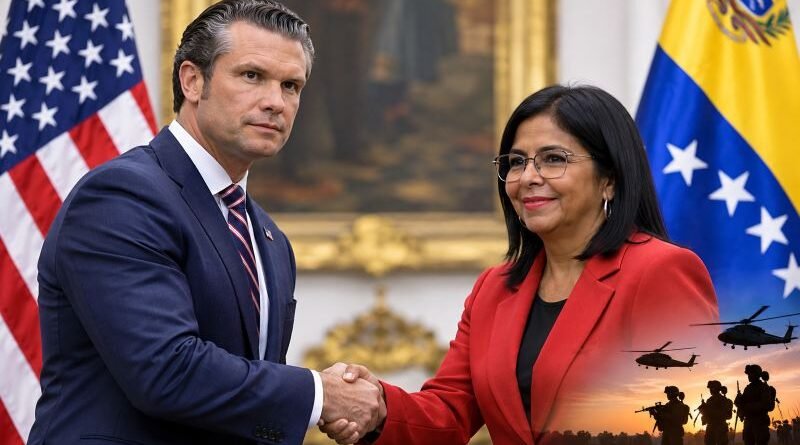
The United States and Venezuela have announced the resumption of military cooperation following high-level talks in Caracas between U.S. Defense Secretary Pete Hegseth and Venezuela’s acting president, Delcy Rodríguez.
The reported agreement represents a significant development in bilateral relations after years of diplomatic tensions and limited military engagement. Discussions focused on defense coordination, intelligence sharing, military training, and joint efforts to address organized crime across Latin America and the Caribbean.
The announcement also highlights Washington’s evolving relationship with Caracas amid Venezuela’s political transition and renewed international interest in the country’s energy resources.
A Diplomatic Meeting Signals a New Chapter in U.S.-Venezuela Relations
Hegseth’s visit to Caracas marks an important moment in relations between the two countries. Their defense institutions have experienced prolonged periods of confrontation, particularly since military cooperation was suspended in 2005.
The meeting reportedly took place at the Miraflores Presidential Palace, where officials discussed opportunities to restore institutional communication and establish new security partnerships.
Representatives from both governments examined ways to strengthen military coordination while addressing common security challenges. The discussions reflected a broader effort to rebuild diplomatic ties following years of political disagreements.
For Washington, renewed engagement could provide additional opportunities to coordinate regional security operations. For Caracas, the initiative could facilitate access to military expertise, technical assistance, and professional training.
Military Training and Technology Become Central Priorities
One of the principal objectives of the proposed cooperation is to strengthen the operational capabilities of Venezuela’s armed forces through specialized training and technical exchanges.
The discussions reportedly included military education, professional development, intelligence coordination, and the potential introduction of modern defense technologies.
Rodríguez emphasized the importance of improving military preparedness and strengthening institutional capabilities. Hegseth, meanwhile, expressed Washington’s interest in developing practical cooperation on shared security concerns.
However, the governments have not publicly established a comprehensive implementation schedule or disclosed the financial commitments associated with the proposed initiatives.
The effectiveness of any future agreement will depend on clear operational arrangements, institutional oversight, and continued diplomatic engagement.
Combating Drug Trafficking and Organized Crime
Transnational organized crime emerged as a central issue during the discussions, reflecting growing concerns about criminal networks operating throughout Latin America and the Caribbean.
Drug trafficking, illicit financial operations, weapons smuggling, and cross-border criminal activity continue to present significant challenges for regional governments.
The United States has identified the disruption of international criminal organizations as a major security priority. Venezuelan authorities have also expressed interest in strengthening their capacity to confront these threats.
Greater intelligence cooperation could improve the ability of both countries to identify criminal networks and coordinate responses to illegal activities.
Nevertheless, security operations remain subject to scrutiny over the use of force, transparency, national sovereignty, and compliance with international law. These considerations could influence the development of future joint initiatives.
More Than Two Decades of Military Estrangement
Military cooperation between the United States and Venezuela deteriorated significantly during the administration of former Venezuelan President Hugo Chávez.
In April 2005, the two countries suspended longstanding military exchanges amid escalating political disagreements. The decision interrupted training programs, professional contacts, and other defense-related activities.
Relations remained strained during subsequent administrations, with sanctions, diplomatic disputes, and disagreements over Venezuela’s political institutions further complicating cooperation.
The latest announcement therefore represents a potential reversal of a policy environment that shaped bilateral military relations for approximately 21 years.
Restoring formal communication between defense institutions could help establish new channels for dialogue. However, rebuilding mutual confidence will likely require sustained engagement and clearly defined commitments.
Venezuela’s Political Transition Remains Under International Scrutiny
The renewed military discussions come amid a complex political transition in Venezuela following the U.S. military operation in January 2026 that resulted in the capture of former President Nicolás Maduro.
Delcy Rodríguez subsequently assumed the country’s leadership, while questions surrounding Venezuela’s political future continued to attract international attention.
Opposition representatives have called for democratic guarantees, transparent elections, and institutional reforms. Meanwhile, Washington has pursued discussions with Venezuelan authorities on security, energy, and diplomatic relations.
The development of military cooperation raises broader questions about how security partnerships may interact with Venezuela’s political transition.
Analysts and international observers will closely examine whether renewed engagement contributes to institutional stability while preserving accountability and respect for democratic principles.
Energy Interests Add an Economic Dimension to Bilateral Relations
The diplomatic rapprochement also coincides with renewed attention to Venezuela’s oil industry, which holds some of the world’s largest proven petroleum reserves.
Energy cooperation has become an important element of discussions between Washington and Caracas, particularly as international companies assess opportunities in Venezuela’s petroleum sector.
Potential investment agreements could support infrastructure improvements, production capacity, and commercial activity. However, these opportunities remain dependent on regulatory conditions, political stability, and international financial arrangements.
Although military cooperation and energy development involve separate policy objectives, both reflect the expanding scope of bilateral engagement. Their combined economic and strategic significance could influence future relations between the two countries and their regional partners.
Washington Expands Its Regional Security Agenda
Hegseth’s reported visit to Venezuela forms part of a broader U.S. effort to strengthen defense relationships throughout Latin America. Regional security discussions have increasingly focused on organized crime, border protection, intelligence coordination, and military preparedness. Countries such as Colombia, Ecuador, and Honduras remain important participants in international efforts to address transnational security threats.
Expanded cooperation could create opportunities for information sharing and coordinated responses to criminal organizations operating across national borders. At the same time, regional governments must balance security cooperation with domestic priorities, sovereignty concerns, and their obligations under international law.
A New Diplomatic Opening With Challenges Ahead
The reported restoration of military cooperation between the United States and Venezuela signals a potentially important change in relations between Washington and Caracas.
After more than two decades of limited defense engagement, both governments appear interested in exploring new forms of collaboration on security and military preparedness. For the United States, the initiative could strengthen regional coordination against organized crime. For Venezuela, it could provide opportunities to improve military training and technical capabilities.
However, the long-term significance of the announcement will depend on whether both administrations establish formal agreements, implement practical programs, and maintain transparent institutional oversight.
As diplomatic contacts continue, regional governments and international observers will be watching how this developing relationship affects security cooperation, Venezuela’s political transition, and broader geopolitical dynamics in the Western Hemisphere.
Source: Information based on reporting by CNN News.