

Government Shutdown Deadline: Iran War Funding Splits Democrats
Congress is on its Thanksgiving recess this week, and when lawmakers return they face a government shutdown deadline of Dec. 11. A dispute over funding for the U.S. war with Iran is now the biggest obstacle to keeping federal agencies open. Several Senate Democrats want any spending package to cut off money for offensive military operations against Iran, while Republican leaders and some senior Democrats warn that tying the two issues together could trigger a shutdown just before the holidays.
The stopgap measure Congress passed in September funds the government only through Dec. 11, and none of the 12 regular spending bills for fiscal year 2027 has become law. Any bipartisan package needs 60 votes in the Senate, which gives Democrats leverage even though Republicans control both chambers until the new Congress is sworn in on Jan. 3, 2027.
Why Iran war funding threatens the shutdown deadline
On Nov. 12, Democratic Sens. Michael Bennet, Tammy Duckworth and Chris Van Hollen, joined by independent Sen. Bernie Sanders, issued a joint statement saying: “When we vote on appropriations, we intend to fund the government and stop funds for this war.” According to IANS, Duckworth’s office has drafted an amendment that would bar the Pentagon from using money in the bill for military operations against Iran until Congress authorizes force, with exceptions for defending the United States and its facilities, intelligence work, defensive assistance to partners and protecting or evacuating U.S. citizens. The amendment’s wording and a floor vote on it have not been agreed.
The fight follows the Senate’s rejection last week of a resolution that would have directed the president to remove U.S. forces from hostilities against Iran, which MB Daily News covered in its report on the failed Iran war powers resolution.
Democrats split over a holiday shutdown
Not all Democrats want to use the deadline as leverage. Rep. Rosa DeLauro of Connecticut, the top Democrat on the House Appropriations Committee, told reporters, “Shutting the government down doesn’t stop the war,” Reuters reported. Sen. Peter Welch of Vermont described the party’s dilemma: “The big obstacle is that we don’t want to fund the war, we don’t want to shut down, how do you solve that.” Sen. John Hickenlooper of Colorado called a shutdown right before the holidays “a tough nut.”
Van Hollen, who is challenging Senate Democratic Leader Chuck Schumer in a leadership election on Dec. 1, said on NBC’s “Meet the Press” on Sunday, “I’m never in favor of shutting down the government. I represent lots of federal employees,” according to IANS. He is instead pressing for a floor vote on an amendment limiting money for offensive operations against Iran. Michigan Sen.-elect Abdul El-Sayed, who takes office in January and will not vote on the December package, also said on the program that he did not want a shutdown.
Senate Majority Leader John Thune has warned against another lapse in funding. “The American people don’t need another government shutdown,” he told reporters, adding that one would be “a colossal mistake,” Reuters reported. Thune said on Friday there had been “some good conversations” but “no deals yet.”
The defense bill at the center of the talks
Senate Appropriations Committee Chair Susan Collins of Maine has said Democrats are seeking Iran language in the new defense funding rather than in the stopgap itself. Senate Republicans have opted for bipartisan talks on a $1.1 trillion defense appropriations bill that includes $69 billion of the $350 billion in new Pentagon spending President Donald Trump has requested, according to Reuters. Republicans say a party-line route through budget reconciliation, which needs only a simple majority, remains on the table.
DeLauro has also said finishing all 12 full-year bills before the deadline “is not possible,” pointing to another short-term extension into early 2027, when Democrats will control both chambers.
What happens next
- Dec. 1: Senate Democrats vote on their leadership, with Schumer facing Van Hollen.
- Dec. 11: current federal funding expires unless Congress passes a new stopgap or full-year bills.
- Jan. 3, 2027: the new Congress, with Democratic majorities in both chambers, is sworn in.
For federal workers, contractors and people who rely on federal services, the coming two weeks will decide whether the government faces another shutdown after a year that has already seen two. The outcome will also shape how much room the incoming Democratic majority has to set war policy, a question that is already reshaping Republican leadership after the midterms.
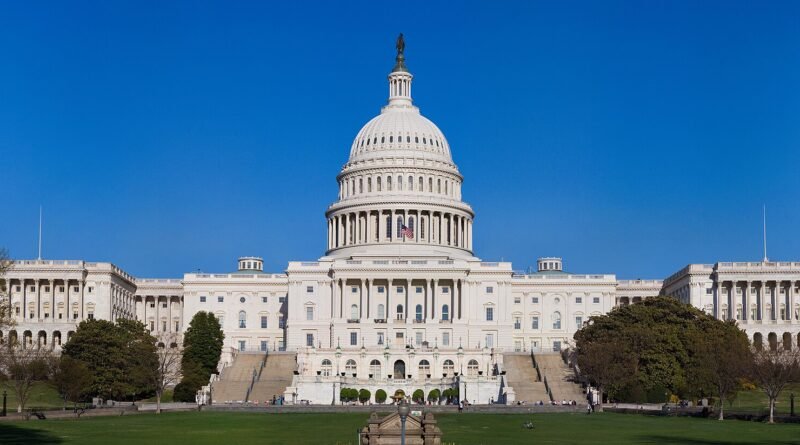
Featured image: Noclip / Wikimedia Commons (public domain).